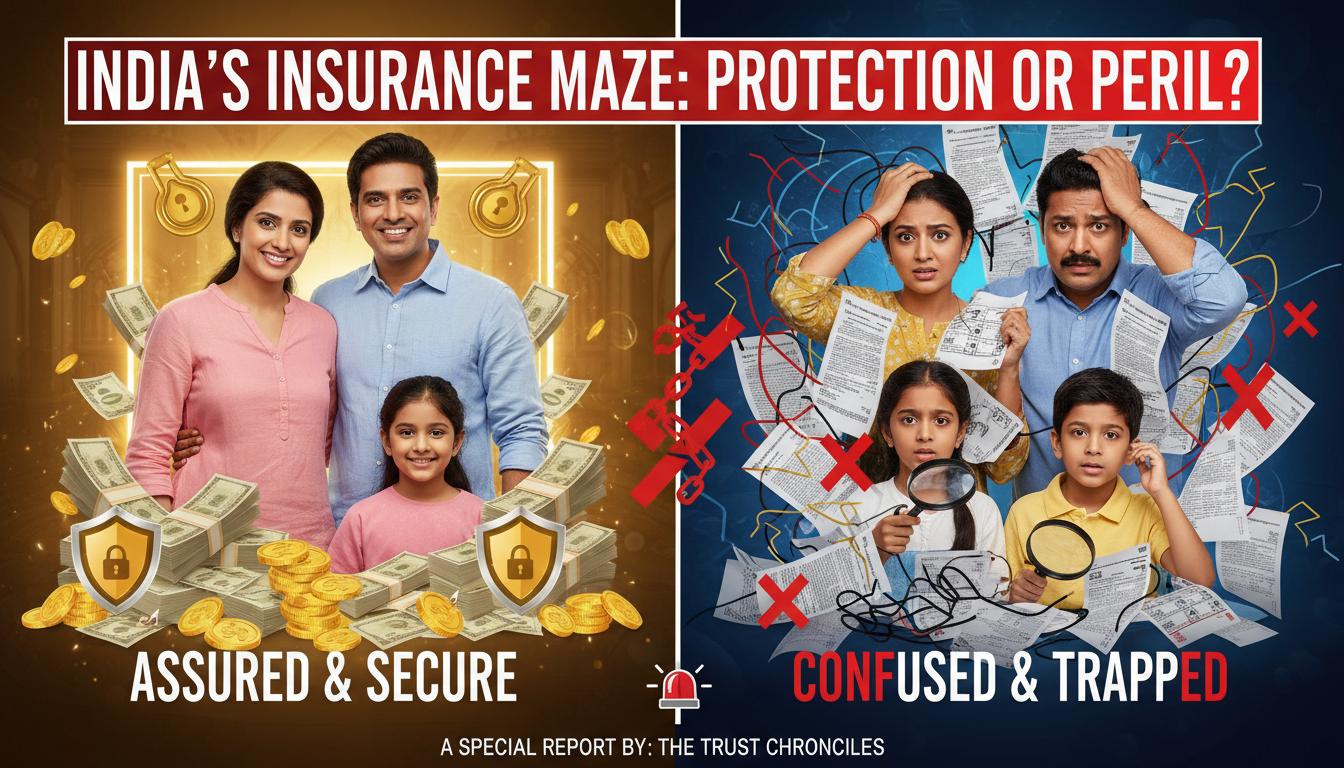
Jansewa India: Imagine walking into your trusted bank to deposit your hard-earned savings, only to walk out with an insurance policy you never wanted, never understood, and certainly never needed. This is not a hypothetical scenario. This is the harsh reality facing millions of Indians every single day.
Insurance mis-selling in India has reached epidemic proportions. According to the Insurance Regulatory and Development Authority of India (IRDAI) Annual Report 2024-25, complaints related to unfair business practices, including mis-selling, jumped to 26,667 cases in FY2024-25 from 23,335 in the previous year. That is a 14% increase in just one year. Even more alarming, these complaints now represent over 22% of all grievances against life insurers.
But here is the truly frightening part: these numbers only represent the tip of the iceberg. A study conducted by Hansa Research in March 2025 among 3,500 health and life insurance buyers revealed that nearly three out of five respondents reported experiencing some form of mis-selling. Around 30% said they had cancelled a policy because they believed it was mis-sold. Most of these victims never approached the regulator. They simply suffered in silence.
Understanding Insurance Mis-selling
Before we dive deeper into this issue, let us understand what insurance mis-selling actually means. In simple terms, mis-selling occurs when an insurance product is sold to a customer without proper disclosure of terms, conditions, or suitability for their specific needs.
IRDAI defines mis-selling as “a significant concern that involves the sale of insurance products to consumers without proper disclosure of terms, conditions, or suitability.” This can take many forms:
• Selling a policy by making false promises about returns or benefits
• Not explaining the exclusions and limitations of the policy
• Recommending products that do not match the customer’s financial goals or risk profile
• Concealing important information about surrender charges or lock-in periods
• Selling insurance as an investment product with guaranteed high returns
The most commonly mis-sold products are endowment plans, ULIPs (Unit Linked Insurance Plans), and whole life policies. These products combine insurance with investment elements, making them complex and often unsuitable for the average buyer who simply wants protection for their family.
The problem is compounded by the complexity of insurance products themselves. Policy documents are often dozens of pages long, filled with legal jargon and fine print that even educated consumers struggle to understand. Agents exploit this complexity, highlighting the benefits while glossing over the limitations and exclusions. The result is a massive information asymmetry where the seller knows far more than the buyer, creating the perfect conditions for exploitation.
Another common tactic is to sell insurance as an investment product. Agents promise high returns, sometimes quoting figures of 12-15% annually, without explaining that these are projected returns based on optimistic assumptions. In reality, the actual returns on many traditional insurance products are barely 4-6%, often lower than what a simple fixed deposit would offer. By the time policyholders realize this, they have already paid several premiums and face hefty surrender charges if they try to exit.
The Alarming Statistics
The numbers tell a devastating story. Let us look at the data from IRDAI’s latest annual report:
| Metric | FY 2022-23 | FY 2023-24 | FY 2024-25 |
|---|---|---|---|
| Total Complaints | 2,02,640 | 2,15,569 | 2,57,790 |
| Mis-selling Complaints | 19,500* | 23,335 | 26,667 |
| % of Total | 9.6% | 10.8% | 10.3% |
| Life Insurance Grievances | 1,05,000* | 1,20,726 | 1,20,429 |
Table 1: Insurance Complaints Growth Over Three Years
The data reveals a disturbing trend. While the total number of grievances against life insurers remained largely stable at 1,20,429 in 2024-25, the proportion of mis-selling complaints has grown significantly. This indicates that the problem is not just persistent but actually worsening.
Health Insurance has seen an even more dramatic spike. Complaints about health insurance policies increased by a staggering 41% to 1,37,361 in FY25 from the previous year. Nearly seven out of ten complaints in the general and health segments were about claims refusal, delays in settlement, partial claim payments, and document disputes.
Insurance penetration in India remains static at 3.7% in FY25, which is significantly below the global average of 7.3%. This low penetration, combined with high mis-selling rates, creates a dangerous cycle where people lose trust in insurance products, further depressing adoption rates.
The insurance density in India showed a modest rise to $97 in FY25 from $95 in the previous year. While this upward trend has been consistent since 2016-17, the pace of growth is far too slow to bring India anywhere close to global standards. Life insurance density stands at $72, while non-life insurance density remains unchanged at $25. These figures highlight both the enormous untapped potential of the Indian insurance market and the urgent need to address the trust deficit caused by rampant mis-selling.
Looking at company-wise data, Life Insurance Corporation of India (LIC) received the highest number of complaints at 74,104 in FY2024-25. Among private insurers, Star Health and Allied Insurance Company Limited topped the list with 20,527 complaints, followed by National Insurance Company Limited with 12,859 complaints. While larger companies naturally receive more complaints due to their bigger customer base, the normalized complaint ratios tell a more accurate story about service quality and ethical practices.
Real Stories, Real Pain
Behind every statistic is a human story of betrayal, financial loss, and emotional distress. Let us look at some real cases that highlight the dark reality of insurance mis-selling in India.
The 90-Year-Old Victim
In February 2025, a case surfaced from Nagpur, Maharashtra, that shocked the nation. Venkatachalam V Iyer, a 90-year-old man who had been banking with Canara Bank for decades, was allegedly mis-sold a life insurance policy with an annual premium of Rs 2 lakh. The policy was scheduled to mature in 2124. Yes, you read that correctly – the year 2124.
The elderly customer trusted his branch manager completely. According to his family, the policy was pitched as “urgent” and “very important,” creating pressure on the senior citizen to consent. The bank had already deducted Rs 2 lakh annually for two consecutive years, taking the total premium paid to Rs 4 lakh – a significant portion of the nonagenarian’s lifetime savings.
What made this case particularly egregious was how the transaction was allegedly structured to bypass age restrictions. The branch manager had earlier advised Iyer to open a joint account with his daughter, citing his advanced age. The insurance policy was then issued with the daughter listed as the “life assured,” while the 90-year-old remained the primary account holder whose funds were used to pay the premiums.
The Fake Loan Trap
Ashwin Jayantilal Shah from Mumbai received calls in 2023 from people who introduced themselves as representatives of Bajaj Finance, offering an interest-free loan of Rs 40 lakh. They told him the loan would be sanctioned only if he first bought a policy they recommended. He agreed, believing it was a temporary step.
The callers then told him there were some discrepancies and asked him to buy a second policy. Then a third. Each time they said it was the final verification step. None of the numbers they used stayed active for long. The servicing agent listed in his policy documents never contacted him. When the third policy was purchased, all communication suddenly stopped. He realized he had paid lakhs for nothing.
The Fake IRDAI Official
Chennai-based D Predheban was trying to recover money from a lapsed policy when he received a call from someone claiming to be a Director at IRDAI. The caller told him he could help recover nearly Rs 10 lakh, but only if he first purchased a set of “dummy policies” that would later be cancelled for a full refund.
The same callers even promised a job for his wife in the underwriting department of Bharti AXA if he invested another Rs 5 lakh in insurance. He believed them because they spoke with the “authority” of officials. It did not occur to him that a regulator would never ask a policyholder to buy multiple policies to unlock a refund.
The SBI Life Nightmare
Mira, a Kolkata resident, went to her local SBI branch in 2022 to renew her fixed deposit. A representative approached her and convinced her to meet an “investment advisor” who would help her get better returns. The advisor, who turned out to be an SBI Life insurance agent, convinced her and her husband to purchase two policies with a combined annual premium of Rs 6 lakh.
The policy documents arrived about 20 days later while they were staying with their son. Mira checked her name and the amount and set it aside. She was never told about the 15-day free-look period, never told surrender was an option, never told to read anything. Months passed before Mira and her husband realized they had been mis-sold the insurance policies. When they returned to the branch to speak to the man who had sold them the product, they were told he had been transferred. They were also told, for the first time, that the person they needed to speak to was not from the bank at all but from SBI Life Insurance.
Mira told investigators that she had never known that SBI Life and SBI were separate entities. “I thought they were the same,” she said. “Nobody told us anything. We learnt everything only after the trouble began.” By this time, the couple had already paid Rs 12 lakh across two policies. A lifetime of savings was committed to policies they no longer believed in and did not fully understand.
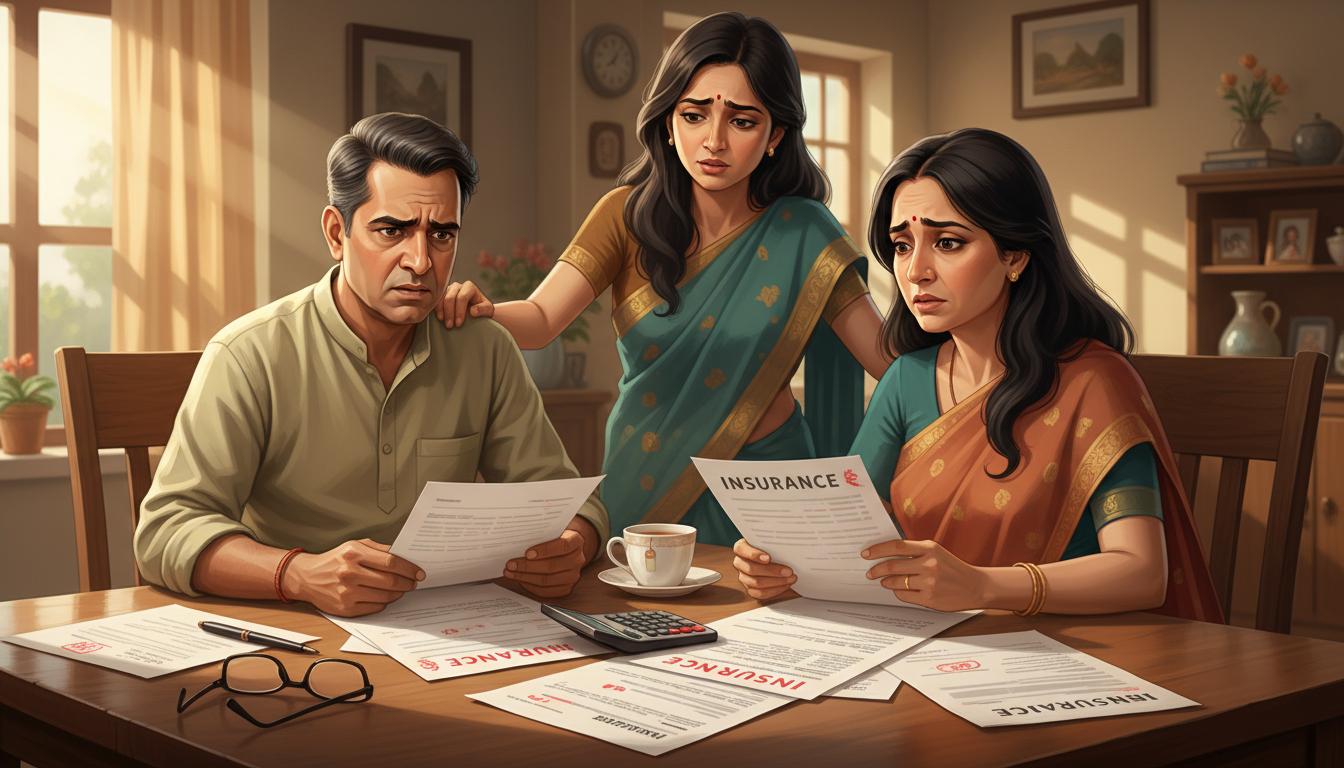
(Image: article_image_1_family.jpg – A family reviewing Insurance documents)
Why Mis-selling Happens
To understand why mis-selling is so rampant in India, we need to look at the systemic issues that create an environment where unethical sales practices can thrive.
The Commission Trap
The root cause of mis-selling lies in the commission structure. Insurance agents and bank relationship managers earn a significant portion of their income from commissions on the policies they sell. According to industry data, first-year commissions on traditional life insurance policies can reach 30-35% of the first year’s premium.
In FY2025, life insurers paid a staggering Rs 29,705 crore in commissions out of a total first-year premium collection of Rs 1.25 lakh crore. That is nearly 24% of all first-year premiums going to agents and intermediaries. Some insurers paid even higher percentages – GoDigit reported a 57% commission payout rate, while HDFC Life paid 45% of first-year premiums as commissions.
This front-loaded commission structure creates a perverse incentive. Agents earn most of their money in the first year, while the customer’s risk extends over the entire policy term. As one industry expert explained, “There is no strong incentive for the seller to care whether a customer stays invested for long. The money is already earned.”
Banking on Trust
What makes mis-selling particularly insidious is that it often happens through institutions that customers trust implicitly. Banks, which people rely on to safeguard their money, have become major channels for insurance sales.
According to IRDAI data, corporate agents including banks accounted for nearly 53% of private life insurers’ individual new business premium in FY25. Banks alone contributed over 49% of private insurers’ individual new business premium during the year.
A 2025 survey of 1,655 bank relationship managers by 1 Finance revealed that nearly 57% admitted that their superiors had asked them to sell or mis-sell financial products to customers, even when these were unsuitable. Everyone has targets – even bank tellers have sales targets. Performance, promotions, incentives – everything is linked to how much business you generate.
The problem is further exacerbated by the lack of punitive action against offenders. While IRDAI has the power to cancel agent licenses and impose fines, enforcement remains weak. Agents who are caught mis-selling often face nothing more than a slap on the wrist, allowing them to continue their predatory practices. Banks and insurance companies, when found complicit, pay nominal fines that are merely a cost of doing business compared to the profits generated from mis-sold policies.
The training provided to agents often focuses more on sales techniques than on product knowledge and ethical selling practices. New recruits are taught how to overcome objections, how to create urgency, and how to close deals – but not how to assess customer needs or recommend suitable products. This creates an army of salespeople who are skilled at persuading people to buy but ignorant about whether what they are selling is actually appropriate for the buyer.
Regulatory Response
The regulatory authorities have not been silent on this issue. Both IRDAI and the Reserve Bank of India (RBI) have taken steps to address mis-selling, though critics argue that more needs to be done.
IRDAI has implemented several measures to protect policyholders:
• Mandatory Customer Information Sheets that summarize key policy features in simple language
• A 15-30 day free-look period during which customers can cancel policies for a full refund
• Suitability assessments for certain complex products
• Requirement for insurers to conduct periodic root cause analysis of mis-selling complaints
• The Bima Bharosa portal – an integrated grievance management system where policyholders can lodge complaints
The Bima Bharosa portal, launched by IRDAI in 2022, serves as a one-stop grievance redressal platform. During FY25, a total of 2.57 lakh grievances were received on the Bima Bharosa portal, with 1.20 lakh related to life insurance and 1.37 lakh linked to general and health insurance. Most grievances were addressed within prescribed timelines.
However, the data shows that a large number of unfair business practice complaints were resolved against policyholders. Of the UFBP grievances disposed of in FY25, over 15,000 cases were decided against policyholders, while around 11,400 cases were resolved either fully or partially in favour of policyholders.
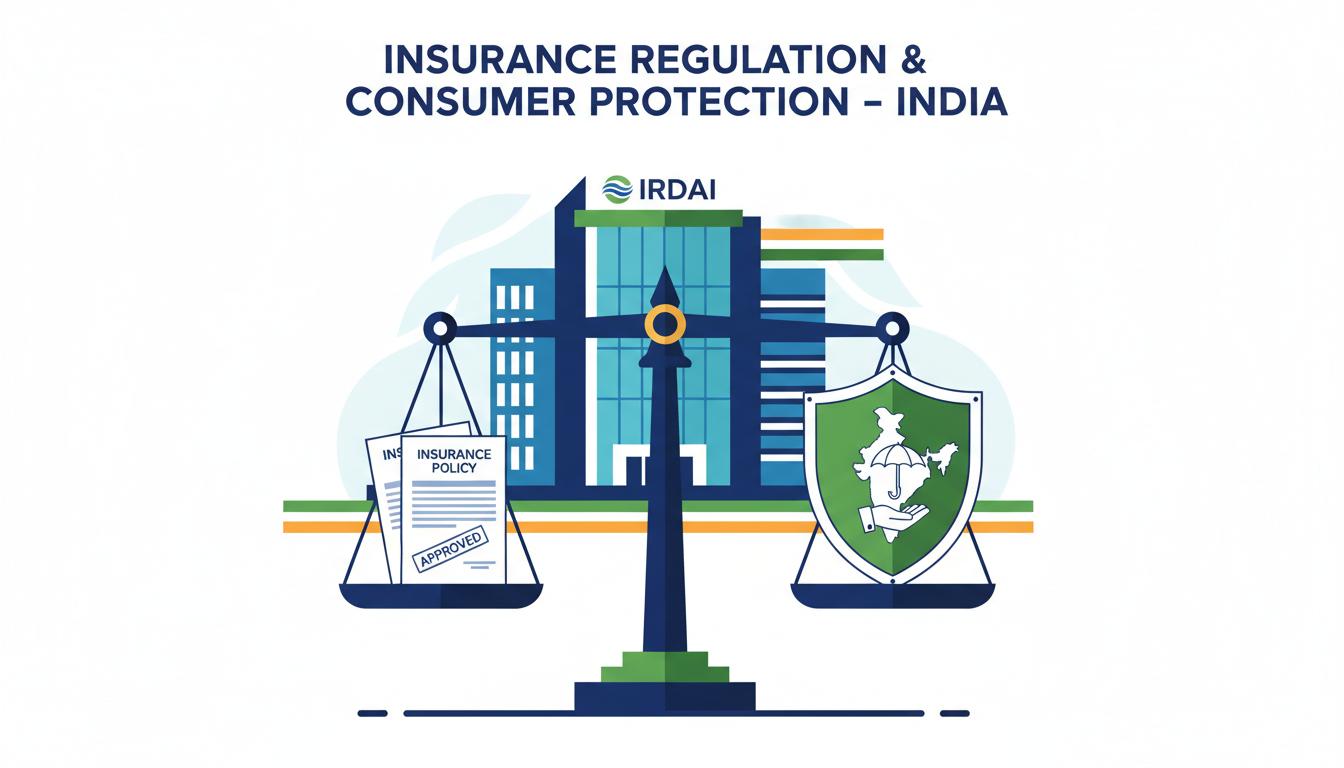
(Image: article_image_2_protection.jpg – Insurance regulation and consumer protection)
How to Protect Yourself
While regulatory measures are important, the best defense against mis-selling is an informed consumer. Here are practical steps you can take to protect yourself:
Before Buying
• Research thoroughly: Compare plans from multiple insurers, examine coverage benefits, premiums, and claim settlement ratios
• Verify the agent’s credentials: Ask for their Insurance Agent License Number and verify it with the insurance company
• Never buy under pressure: If an agent says an offer is “urgent” or “limited time,” that is a red flag
• Question unrealistic promises: If returns sound too good to be true, they probably are
During the Purchase
• Read the policy document carefully: Pay special attention to exclusions, waiting periods, and surrender charges
• Ask questions: Make sure you understand what is covered, what is not, and how claims work
• Get everything in writing: Do not rely on verbal promises
• Record calls if possible: This can be valuable evidence if there is a dispute later
After Purchase
• Use the free-look period: If you feel the policy was misrepresented, cancel within 15-30 days for a full refund
• Listen to verification calls: Insurance companies typically call to verify your understanding of the policy
• Keep all documentation: Save policy documents, premium receipts, and all correspondence
If You Are a Victim
If you believe you have been mis-sold an insurance policy, take action immediately. Do not let embarrassment or intimidation stop you from seeking justice. Remember, you are not alone – thousands of people have successfully fought back against mis-selling and recovered their money.
The first step is to gather all evidence. Collect policy documents, premium receipts, any written communication with the agent or company, and notes about verbal promises made during the sales process. If you have call recordings or emails, preserve them carefully. This evidence will be crucial in proving your case.
- Contact your insurance company: Write to their grievance redressal officer with full details of the mis-selling
- Use the Bima Bharosa portal: Register your complaint at https://bimabharosa.irdai.gov.in/
- Call the IRDAI helpline: Dial 155255 or 1800 4254 732 for assistance
- Escalate to the Ombudsman: If the insurer does not resolve your complaint satisfactorily
- Seek professional help: Organizations like Insurance Samadhan can assist with complex cases
Insurance mis-selling is a complex problem with no easy solutions. It requires a multi-pronged approach involving regulators, insurers, distributors, and consumers.
IRDAI has indicated that insurers need to move beyond case-by-case resolution and examine recurring causes. The regulator has advised insurers to implement strategies such as assessing product suitability, implementing distribution channel-specific controls, and developing plans to address mis-selling grievances through periodic root cause analysis.
The Finance Ministry has repeatedly cautioned banks and insurance companies against mis-selling, emphasizing the importance of upholding corporate governance best practices. However, without stronger enforcement and penalties, these warnings may fall on deaf ears.
For the industry to regain public trust, fundamental changes are needed. Commission structures should be reformed to align agent incentives with long-term customer satisfaction rather than short-term sales. Product designs should be simplified. Disclosure requirements should be strengthened. And most importantly, there must be real consequences for those who engage in unethical sales practices.
As consumers, we must remain vigilant. Insurance is a valuable financial tool when used correctly. It can protect our families, secure our futures, and provide peace of mind. But only if we buy the right products for the right reasons from the right people.
The government and regulators must also step up their efforts. Stronger enforcement of existing regulations, higher penalties for violations, and mandatory compensation for victims are essential. The Bima Bharosa portal is a step in the right direction, but more needs to be done to make the grievance redressal process faster, simpler, and more effective.
Insurance companies themselves must take greater responsibility for the actions of their agents and distributors. Rather than treating mis-selling as a cost of doing business, they should invest in better training, stricter oversight, and robust internal compliance mechanisms. Companies that consistently generate high complaint rates should face regulatory sanctions, including restrictions on new product launches and business expansion.
The dark side of insurance mis-selling in India is real, and it affects millions of people. But by staying informed, asking questions, and refusing to be pressured into decisions, we can protect ourselves and our loved ones from becoming the next victims. Remember, no one cares more about your financial well-being than you do. Take the time to understand what you are buying, and never be afraid to walk away from a deal that does not feel right.