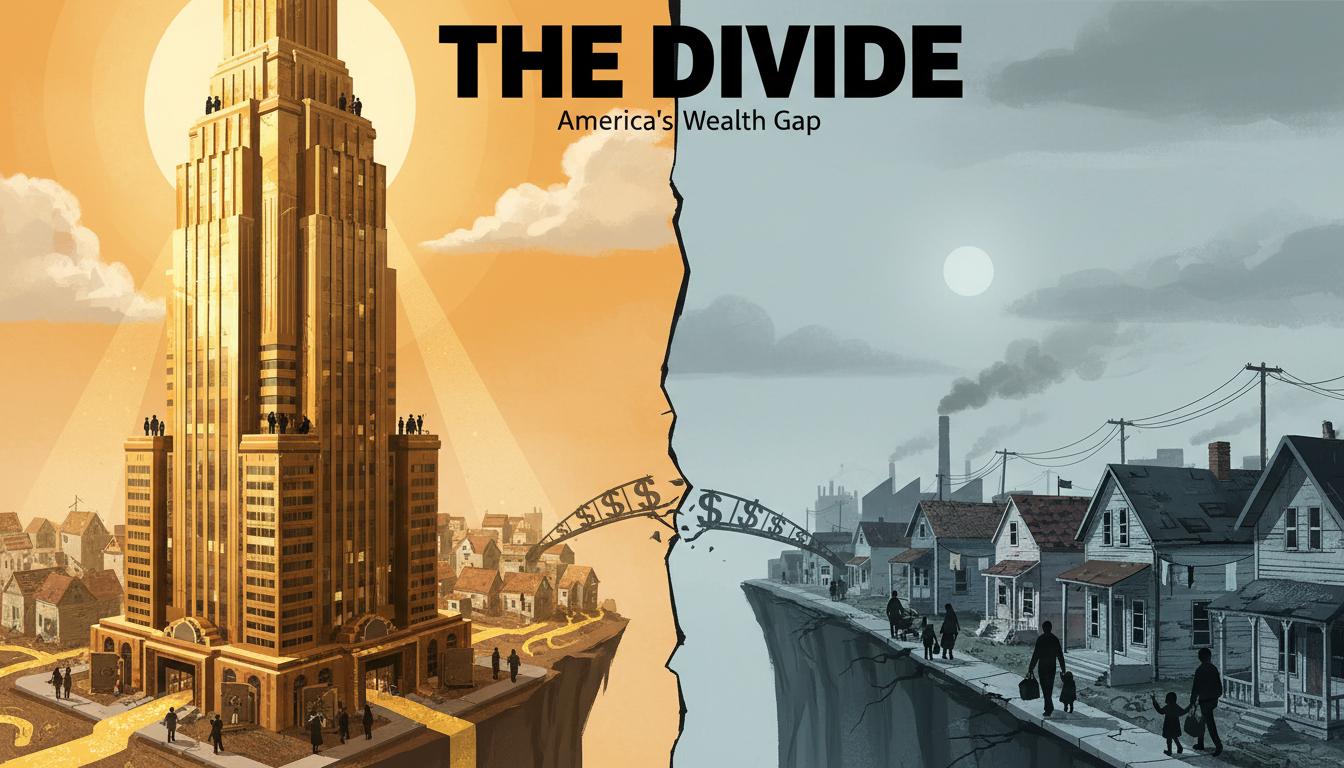
Every morning, millions of workers across the country wake up before dawn. They get dressed in the dark, grab a quick breakfast if they can afford it, and head out to jobs that keep the economy running. These are the people who serve your coffee, stock grocery store shelves, clean hospital rooms, and care for elderly residents in nursing homes. They work hard—often holding down multiple jobs—and yet, at the end of each month, they find themselves struggling to pay the bills. This is the reality of the minimum wage versus cost of living crisis that has been quietly devastating families and communities for decades.
The concept seems simple enough on the surface. Minimum wage laws were created to ensure that workers receive a fair baseline pay for their labor. The idea was that no one who works full-time should have to live in poverty. It was meant to be a floor, a safety net that prevents exploitation and guarantees a basic standard of living. But somewhere along the way, that floor turned into a trap. As the cost of everything from housing to healthcare has skyrocketed, minimum wage increases have failed to keep pace. The result is a widening gap between what people earn and what they need to survive.
This article explores the complex relationship between minimum wage policies and the rising cost of living. We will examine how we got here, who is most affected, and what can be done to bridge the gap. We will look at real stories of struggle and resilience, analyze the economic arguments on both sides, and consider solutions that have worked in other places. By the end, you will have a clearer understanding of why this issue matters—not just for low-wage workers, but for everyone who cares about a fair and functioning society.
Chapter 1: Understanding the Basics
What Is Minimum Wage?
Minimum wage is the lowest amount that employers are legally allowed to pay their workers per hour of work. It was first introduced in the United States during the Great Depression as part of the Fair Labor Standards Act of 1938. The initial federal minimum wage was set at just 25 cents per hour, which might sound impossibly low today, but at the time it was considered a significant step forward for worker protection.
The purpose of minimum wage laws is to prevent employers from taking advantage of workers who might otherwise have no bargaining power. In a free market, wages are theoretically determined by supply and demand. If there are more workers than jobs, employers can offer lower wages and still find people willing to work. Minimum wage sets a legal limit on how low those wages can go.
Today, the federal minimum wage in the United States stands at $7.25 per hour, a rate that has not changed since 2009. That means someone working 40 hours per week, 52 weeks per year, at minimum wage earns just $15,080 annually before taxes. To put that in perspective, the federal poverty line for a single person in 2024 is $14,580. A minimum wage worker earning exactly that amount is living just barely above the official poverty threshold—and that is for a single person with no dependents.
The Cost of Living: More Than Just Rent
When we talk about the cost of living, we are referring to the total amount of money needed to cover basic expenses such as housing, food, healthcare, transportation, and other necessities. These costs vary significantly depending on where you live. A dollar goes much further in rural Mississippi than it does in New York City or San Francisco.
Housing is typically the largest expense for most households. According to the U.S. Department of Housing and Urban Development, families that pay more than 30 percent of their income for housing are considered cost-burdened and may have difficulty affording necessities such as food, clothing, transportation, and medical care. For minimum wage workers, housing costs often consume 50 percent or more of their income, leaving very little for everything else.
Food is another major expense. The USDA estimates that a thrifty food plan for a single adult costs around $200 to $250 per month. For a family of four, that number jumps to $700 or more. Transportation—whether it is car payments, insurance, gas, or public transit—can easily add another $300 to $600 per month. Healthcare costs, even with insurance, can be devastating. A single emergency room visit can result in bills that take years to pay off.
When you add up all these expenses, the gap between minimum wage and actual living costs becomes starkly apparent. In many parts of the country, a single adult needs to earn at least $15 to $20 per hour just to cover basic necessities. For families with children, the required wage is significantly higher.
The Living Wage Concept
This brings us to an important distinction: minimum wage versus living wage. While minimum wage is a legal requirement set by government, living wage is a theoretical concept that represents the income needed to maintain a basic standard of living. Living wage calculations take into account local costs for housing, food, childcare, healthcare, transportation, and other necessities.
Researchers at MIT have developed a living wage calculator that estimates the minimum income necessary for a typical family to cover basic expenses. According to their data, the living wage for a single adult in the United States ranges from about $14 per hour in rural areas to over $25 per hour in expensive cities. For a family of four, the living wage can exceed $35 per hour in high-cost areas.
The gap between minimum wage and living wage is what creates the cost of living crisis. When workers earn less than a living wage, they are forced to make impossible choices. Do they pay the rent or buy groceries? Do they fill their prescription or fix their car? These are the daily dilemmas faced by millions of working families.
Chapter 2: The Historical Context
The Rise and Fall of Minimum Wage Purchasing Power
To understand the current crisis, we need to look at how minimum wage has changed over time. When the federal minimum wage was first established in 1938, it was designed to increase periodically to keep up with inflation and rising living standards. For several decades, that is exactly what happened. The minimum wage reached its peak purchasing power in 1968, when it was equivalent to about $12.50 per hour in today’s dollars.
Since then, the story has been one of decline. While the nominal minimum wage has increased from $1.60 in 1968 to $7.25 today, inflation has eroded its value significantly. If minimum wage had kept pace with inflation since 1968, it would be over $12 per hour today. If it had kept pace with worker productivity, it would be closer to $24 per hour.
This decline in purchasing power was not inevitable. It was the result of political choices. Starting in the 1980s, there was a shift in economic thinking that emphasized deregulation and free markets. The idea that raising minimum wage would hurt businesses and destroy jobs gained political traction. As a result, minimum wage increases became less frequent and smaller in magnitude.
The last federal increase came in 2009, when the minimum wage rose from $6.55 to $7.25 per hour. Since then, fifteen years have passed without any adjustment. During that same period, the cost of housing has increased by more than 50 percent. Healthcare costs have risen even faster. Food prices have steadily climbed. Yet the minimum wage has remained frozen, its real value declining year after year.
The Shift in Economic Policy
The stagnation of minimum wage is part of a broader shift in economic policy that began in the late 1970s and accelerated in the 1980s. This shift, often associated with the term “neoliberalism,” emphasized free markets, deregulation, and reduced government intervention in the economy.
Under this framework, wages were seen as just another price determined by market forces. The idea was that if workers wanted higher wages, they should acquire more skills and education to make themselves more valuable to employers. Government intervention in the form of minimum wage laws was viewed as distortionary and harmful.
This philosophy had a profound impact on labor policy. Union membership declined sharply as laws made it harder for workers to organize. Trade agreements shipped manufacturing jobs overseas. The social safety net was weakened. And minimum wage increases became politically difficult to pass.
The results of these policies are visible in the data. Income inequality, which had been relatively stable in the decades after World War II, began to rise sharply. The gap between the rich and everyone else grew wider. And workers at the bottom of the income ladder found themselves falling further behind.
State and Local Responses
While the federal minimum wage has stagnated, many states and cities have taken matters into their own hands. As of 2024, thirty states and the District of Columbia have minimum wages higher than the federal rate. Some cities have gone even further, implementing local minimum wages that reflect their higher costs of living.
California, for example, has a state minimum wage of $16 per hour, with some cities requiring even more. Washington state has set its minimum at $16.28 per hour. New York has a tiered system, with higher wages in New York City and lower rates upstate.
These state and local increases have helped millions of workers, but they have also created a patchwork of different wage rates across the country. A worker in Mississippi earning $7.25 per hour might do the exact same job as a worker in California earning $16 per hour. This geographic disparity raises questions about fairness and the proper role of federal versus state policy.
Chapter 3: The Human Cost
Maria’s Story: Working Two Jobs to Survive
Maria is 34 years old and works two jobs in the hospitality industry. From 6 AM to 2 PM, she cleans rooms at a mid-priced hotel. From 3 PM to 10 PM, she works as a server at a casual dining restaurant. On a good day, she might get five hours of sleep.
Her hourly wages are $10 at the hotel and $8.50 plus tips at the restaurant. On average, she earns about $450 per week, or roughly $23,000 per year. That might sound like a decent income until you consider her expenses.
Maria rents a one-bedroom apartment for $950 per month. Utilities add another $150. Her car payment is $280, insurance is $120, and gas costs about $200 per month. She has a daughter in elementary school, and childcare costs $600 per month. Health insurance through her employer costs $150 per paycheck, and she still has copays and deductibles when she needs care.
When you add up all these expenses, Maria is spending more than she earns. She relies on credit cards to bridge the gap, and her debt grows each month. She has no savings, no retirement account, and no safety net if something goes wrong. A single unexpected expense—a car repair, a medical bill—could send her into financial ruin.
Maria’s story is not unique. Millions of workers find themselves in similar situations, working long hours at multiple jobs and still unable to make ends meet. They are not lazy or irresponsible. They are simply caught in a system where wages have not kept pace with costs.
The Impact on Families and Children
The cost of living crisis does not just affect individual workers. It ripples through entire families and has lasting impacts on children. Research consistently shows that growing up in poverty has negative effects on children’s health, education, and future economic prospects.
Children in low-income families are more likely to experience food insecurity, which can lead to developmental delays and health problems. They are more likely to live in unstable housing situations, moving frequently as their parents struggle to keep up with rent. They are less likely to have access to quality healthcare, early childhood education, and enrichment activities.
These disadvantages compound over time. Children who grow up in poverty are more likely to struggle in school, less likely to graduate from high school or college, and more likely to end up in low-wage jobs themselves. The cost of living crisis is not just a problem for today’s workers—it is creating a cycle of poverty that spans generations.
Parents facing financial stress also experience mental health challenges. The constant worry about money, the shame of not being able to provide for their children, and the exhaustion of working multiple jobs all take a toll. Rates of anxiety, depression, and other mental health conditions are higher among low-income populations, and these conditions can further reduce earning potential.
The Healthcare Dilemma
One of the most devastating aspects of the minimum wage versus cost of living crisis is its impact on healthcare. Low-wage workers are often employed by companies that do not offer health insurance, or they cannot afford the premiums even when coverage is available.
Without insurance, routine medical care becomes a luxury. Workers delay doctor visits, skip preventive screenings, and try to treat illnesses at home. Minor health problems become major ones. Chronic conditions go unmanaged. And when a medical emergency does occur, the resulting bills can be catastrophic.
Medical debt is one of the leading causes of bankruptcy in the United States. Even with insurance, high deductibles and copays can leave families with thousands of dollars in bills they cannot pay. For minimum wage workers already struggling to cover basic expenses, a single hospital visit can be financially devastating.
The irony is that this healthcare crisis affects not just individuals but the broader economy. Unhealthy workers are less productive. They miss more days of work. They are more likely to leave the workforce entirely due to disability. The failure to ensure access to affordable healthcare for all workers is a drag on economic growth that costs everyone.
Chapter 4: The Economic Arguments
The Case for Raising Minimum Wage
Proponents of raising the minimum wage make several compelling arguments. First and foremost is the moral case: people who work full-time should not live in poverty. If society values work, it should ensure that work provides a decent standard of living.
Beyond the moral argument, there are economic benefits to raising minimum wage. When low-wage workers get a raise, they tend to spend that money immediately on goods and services in their local communities. This increased consumer demand can stimulate economic growth and create jobs.
Higher wages can also reduce turnover and increase productivity. When workers earn more, they are more likely to stay with their employers longer, reducing the costs of hiring and training new employees. They are also more motivated and engaged, leading to better customer service and higher quality work.
There is also evidence that raising minimum wage can reduce government spending on social programs. When workers earn more, they are less likely to need food stamps, housing assistance, and other forms of public aid. This means that taxpayers subsidize low-wage employers less, and government resources can be directed to other priorities.
The Concerns of Critics
Critics of minimum wage increases raise several concerns. The most common argument is that higher wages will lead to job losses. If employers have to pay workers more, the theory goes, they will hire fewer workers or automate jobs away.
There is some evidence to support this concern, particularly for very large minimum wage increases. When Seattle raised its minimum wage to $15 per hour, some studies found modest reductions in hours worked for low-wage employees. However, other studies found little to no impact on employment, and the overall effect on worker earnings was positive.
Another concern is that higher minimum wages will hurt small businesses. Large corporations like Walmart and McDonald’s can absorb higher labor costs more easily than mom-and-pop shops operating on thin margins. Some small business owners argue that minimum wage increases could force them to close their doors.
There is also the question of regional variation. A $15 minimum wage might be appropriate for high-cost cities like San Francisco or New York, but it could be economically damaging in rural areas where the cost of living is much lower. A one-size-fits-all federal minimum wage might not make sense given the vast differences in living costs across the country.
What the Research Shows
Economists have been studying the effects of minimum wage increases for decades, and the research has evolved over time. Early studies tended to find larger negative effects on employment, but more recent research using better data and methods has generally found smaller effects.
A comprehensive review of minimum wage research by economists at the University of California, Berkeley found that moderate increases in the minimum wage have little to no effect on employment. The review examined studies of minimum wage increases across the United States and found that, on average, workers benefited from higher wages without significant job losses.
However, the review also noted that very large increases in areas with lower costs of living might have different effects. The research on $15 minimum wages is still relatively new, and economists are continuing to study the impacts in places that have implemented these higher wages.
What is clear from the research is that the relationship between minimum wage and employment is more complex than simple economic models suggest. Labor markets are not perfectly competitive, and employers have more power to set wages than traditional theory assumes. This means that minimum wage increases can raise worker incomes without necessarily causing job losses.
Chapter 5: The Housing Crisis Connection
Skyrocketing Rent and Stagnant Wages
If there is one factor that has contributed most to the cost of living crisis, it is the dramatic increase in housing costs. Over the past two decades, rents have risen much faster than wages in most parts of the country. This has created a severe affordability crisis that affects not just low-wage workers but middle-income families as well.
According to data from the Bureau of Labor Statistics, rents have increased by about 60 percent since 2000, while median wages have increased by only about 20 percent. This gap is even more pronounced for low-wage workers, whose wages have barely budged while housing costs have soared.
The causes of rising housing costs are complex. In many cities, restrictive zoning laws and development regulations have limited the supply of new housing. Population growth and migration to urban areas have increased demand. And the financialization of housing, with investors buying up properties and driving up prices, has made homeownership increasingly out of reach for working families.
Whatever the causes, the result is that housing has become unaffordable for millions of workers. The National Low Income Housing Coalition estimates that a full-time worker earning minimum wage cannot afford a modest two-bedroom apartment in any state in the country. In many areas, even a one-bedroom apartment is out of reach.
The Rise of Cost Burden
Housing experts use the term “cost burden” to describe households that spend more than 30 percent of their income on housing. Those who spend more than 50 percent are considered severely cost-burdened. By these measures, the housing crisis is severe and widespread.
According to the Joint Center for Housing Studies at Harvard University, nearly half of all renters in the United States are cost-burdened. For low-income renters, the situation is even worse. About 80 percent of renters earning less than $30,000 per year are cost-burdened, and more than half are severely cost-burdened.
When households spend so much of their income on housing, they have little left for other necessities. They cut back on food, healthcare, and transportation. They are unable to save for emergencies or retirement. And they are one unexpected expense away from eviction and homelessness.
The stress of housing insecurity also takes a toll on mental and physical health. Studies have found that people who are worried about losing their homes experience higher rates of anxiety, depression, and other health problems. Children in unstable housing situations do worse in school and have more behavioral problems.
Homeownership: An Impossible Dream
For previous generations, homeownership was a key pathway to building wealth and financial security. A home was not just a place to live—it was an investment that appreciated over time and could be passed down to children. But for today’s minimum wage workers, homeownership is an impossible dream.
The median home price in the United States is now over $400,000. To afford a home at that price, a buyer would need a down payment of at least $40,000 and an annual income of about $100,000 to qualify for a mortgage. For someone earning minimum wage, saving for a down payment would take decades, if it were possible at all.
Even in more affordable areas, homeownership remains out of reach for low-wage workers. The combination of stagnant wages, rising prices, and tighter lending standards since the 2008 financial crisis has created a permanent class of renters who will never build equity through homeownership.
This has long-term implications for wealth inequality. Homeownership has historically been the primary way that middle-class families build wealth. As homeownership becomes increasingly inaccessible, the wealth gap between those who own homes and those who rent continues to grow.
Chapter 6: The Role of Government and Policy
Federal Policy Failures
The federal government has failed to keep minimum wage in line with the cost of living. The last increase was in 2009, and since then Congress has been unable to pass another raise despite years of debate and multiple proposals.
Part of the problem is political polarization. Minimum wage has become a partisan issue, with Democrats generally supporting increases and Republicans generally opposing them. This has made it difficult to build the consensus needed to pass legislation, especially given the filibuster rules in the Senate that require 60 votes to advance most bills.
There have been attempts to break the deadlock. In 2021, Democrats included a provision to raise the minimum wage to $15 per hour by 2025 in their COVID-19 relief package. However, the Senate parliamentarian ruled that the provision could not be included in the budget reconciliation process, and the increase was removed from the final bill.
The failure to raise the federal minimum wage means that millions of workers in states that follow the federal rate continue to earn just $7.25 per hour. These workers have seen their real wages decline year after year as inflation erodes their purchasing power.
State and Local Innovations
While the federal government has been gridlocked, states and cities have been more active in addressing the minimum wage versus cost of living crisis. As mentioned earlier, thirty states now have minimum wages higher than the federal rate. Some have implemented automatic increases tied to inflation, ensuring that wages keep pace with rising costs.
Cities have been even more aggressive, particularly in high-cost areas. San Francisco, Seattle, New York City, and Washington, D.C. have all implemented minimum wages of $15 per hour or more. Some cities have also enacted laws requiring paid sick leave, predictable scheduling, and other worker protections.
These state and local actions have provided valuable laboratories for policy experimentation. Researchers have been able to study the effects of different minimum wage levels in different contexts, generating evidence about what works and what does not.
However, state and local action also has limitations. Workers in states with low minimum wages are left behind. And in some cases, state legislatures have blocked cities from raising wages, creating a frustrating dynamic where local governments want to do more but are prevented by state law.
Other Policy Solutions
Raising the minimum wage is not the only way to address the cost of living crisis. There are other policy tools that can help low-wage workers make ends meet.
One approach is to expand the Earned Income Tax Credit (EITC), a refundable tax credit that supplements the earnings of low-income workers. The EITC has been shown to reduce poverty, encourage work, and improve health and educational outcomes for children. Expanding the credit and making it available to more workers could provide significant relief.
Another approach is to invest in affordable housing. This could include building more public housing, providing rental assistance to low-income families, and implementing policies that encourage the development of affordable units. Reducing housing costs would go a long way toward closing the gap between wages and living expenses.
Universal healthcare would also make a huge difference. If workers did not have to worry about paying for health insurance or medical bills, their paychecks would go much further. Many other developed countries provide healthcare to all citizens at a lower cost than the United States spends on its fragmented system.
Finally, policies that support worker organizing and collective bargaining can help workers negotiate for better wages and benefits. Unions have historically been a powerful force for raising worker incomes, and their decline has contributed to wage stagnation.
Chapter 7: Looking Forward
The Movement for $15
In recent years, a grassroots movement has emerged demanding a $15 minimum wage. The “Fight for $15” began in 2012 when fast-food workers in New York City walked off the job demanding higher pay and the right to form a union. Since then, the movement has spread across the country and achieved significant victories.
Several states and cities have passed laws raising their minimum wages to $15 per hour or more. Major employers like Amazon, Target, and Costco have raised their starting wages to $15 or higher. And public opinion has shifted, with polls showing strong majority support for a $15 federal minimum wage.
The movement has also helped to change the conversation about low-wage work. It has highlighted the reality that many workers earning minimum wage are not teenagers working for spending money—they are adults trying to support themselves and their families. It has challenged the notion that low-wage jobs are unskilled or unimportant, emphasizing the essential role these workers play in the economy.
Whether the federal minimum wage will eventually reach $15 remains to be seen. But the movement has already succeeded in raising wages for millions of workers and putting the issue of income inequality at the center of political debate.
The Impact of Automation
Looking to the future, one factor that could reshape the minimum wage debate is automation. As technology advances, many low-wage jobs are at risk of being automated. Self-checkout machines are replacing cashiers. Robots are being developed that can flip burgers and clean hotel rooms. Artificial intelligence is threatening jobs in customer service and other fields.
Some argue that raising the minimum wage will accelerate this trend by making automation more cost-effective for employers. If a machine can do the job of a $7.25-per-hour worker, it might not be worth the investment. But if that worker costs $15 per hour, automation becomes more attractive.
Others argue that automation is coming regardless of wage levels, and that the best response is to prepare workers for the jobs of the future. This might include investing in education and training programs, strengthening the social safety net, and considering policies like universal basic income that decouple survival from employment.
The relationship between minimum wage and automation is complex, and economists are still debating how significant the effects will be. But it is clear that the nature of work is changing, and policies will need to evolve to keep pace.
A Call to Action
The minimum wage versus cost of living crisis is not an abstract economic issue. It is a human crisis that affects millions of families every day. It is the mother skipping meals so her children can eat. It is the father working three jobs and never seeing his kids. It is the young adult drowning in debt with no hope of ever owning a home.
Addressing this crisis will require action at all levels of government and society. It will require raising the minimum wage to a level that reflects the actual cost of living. It will require building more affordable housing and ensuring access to healthcare. It will require strengthening worker protections and supporting the right to organize.
But it will also require a shift in how we think about work and value. We need to recognize that every job that needs to be done deserves to pay a living wage. We need to acknowledge that workers are not commodities to be bought at the lowest possible price—they are human beings with dignity and rights.
The cost of living crisis is a solvable problem. Other countries have found ways to ensure that workers earn enough to live on. We have the resources and the knowledge to do the same. What we need is the political will and the collective commitment to make it happen.
A Matter of Values
At its core, the minimum wage versus cost of living crisis is a question of values. What kind of society do we want to live in? Do we believe that everyone who works hard should be able to afford a decent life? Or are we comfortable with a system where millions of working people struggle to survive?
The data is clear. The stories are compelling. The solutions are within reach. What remains is the will to act.
For too long, we have accepted a status quo where the rich get richer while everyone else falls behind. We have tolerated a system where corporations pay their CEOs millions while their workers rely on food stamps. We have normalized the idea that working full-time is not enough to escape poverty.
But it does not have to be this way. We can choose a different path. We can raise the minimum wage to a living wage. We can ensure that everyone has access to affordable housing and healthcare. We can build an economy that works for everyone, not just those at the top.
The cost of living crisis is not just a problem for low-wage workers. It affects all of us. It weakens our communities, drains our public resources, and undermines the promise of opportunity that has always been at the heart of the American dream.
The time for action is now. The workers are waiting. The families are struggling. And the gap between minimum wage and the cost of living continues to grow. Let us close that gap and build a future where work truly pays.