Picture this: You wake up one morning, walk to your kitchen, turn on the faucet, and nothing comes out. No water for your morning coffee. No water to brush your teeth. No water to flush the toilet. Sounds like a nightmare, right? For millions of people around the world, this isn’t a bad dream—it’s their daily reality. And according to a terrifying new report from the United Nations, this could soon become the new normal for billions more.
The world is running out of water. Not someday in the distant future. Not in a hundred years. We’re talking about right now, with the situation set to reach catastrophic levels by 2030. The UN has officially declared that our planet has entered an era of “global water bankruptcy,” a term that sounds scary because it is. This isn’t just another environmental warning that we can brush aside. This is a wake-up call that affects every single person on Earth.
What Does “Water Bankruptcy” Really Mean?
Let’s break this down in simple terms. When a company goes bankrupt, it means they’ve spent more money than they have. They can’t pay their bills. Their debts are bigger than their assets. Well, the same thing is happening with water right now.
For decades, we’ve been taking more water from rivers, lakes, and underground aquifers than nature can replace. We’ve been living beyond our hydrological means—spending our water “savings” faster than rainfall and snowmelt can refill them. The UN report explains that many regions have pushed their water systems past the point of no return. The damage is irreversible. We can’t just wait for things to go back to normal because the old normal doesn’t exist anymore.
Dr. Kaveh Madani, the lead author of the UN report and director of the UN University’s Institute for Water, Environment and Health, puts it bluntly: “This report tells an uncomfortable truth: many regions are living beyond their hydrological means, and many critical water systems are already bankrupt.” That’s not the kind of statement you hear from cautious scientists every day. When researchers start using words like “bankruptcy” and “irreversible,” it’s time to pay attention.
The Shocking Numbers Behind the Global Water Crisis
Let’s talk about the numbers because they’re truly staggering. Nearly four billion people—almost half the world’s population—already face severe water scarcity for at least one month every year. That’s not a small group of people in faraway places. That’s your neighbors, your coworkers, your friends. That’s half of everyone you know.
The UN predicts that by 2030, global demand for freshwater will exceed supply by a terrifying 40%. Think about that for a moment. We won’t just be short on water; we’ll be catastrophically short. The gap between what we need and what we have will be enormous. And this isn’t happening because we’re using water more efficiently and need more to keep up with progress. It’s happening because we’re wasteful, because our populations are growing, because our climate is changing, and because we’ve taken our water supplies for granted for far too long.
More than half of the world’s large lakes have lost water since the early 1990s. The Aral Sea, once the world’s fourth-largest lake, has nearly disappeared. Over 410 million hectares of natural wetlands—an area almost as large as the entire European Union—have been destroyed in the past fifty years. These aren’t just statistics on a page. These are living ecosystems that support wildlife, filter our water, protect us from floods, and recharge our groundwater supplies. When we lose them, we lose much more than just water.
Day Zero: When the Taps Run Dry
You’ve probably never heard the term “Day Zero” before, but you should learn it because it might become part of your vocabulary sooner than you think. Day Zero is the day when a city’s water supply runs out. It’s the day when officials turn off the taps because there’s simply nothing left to pump.
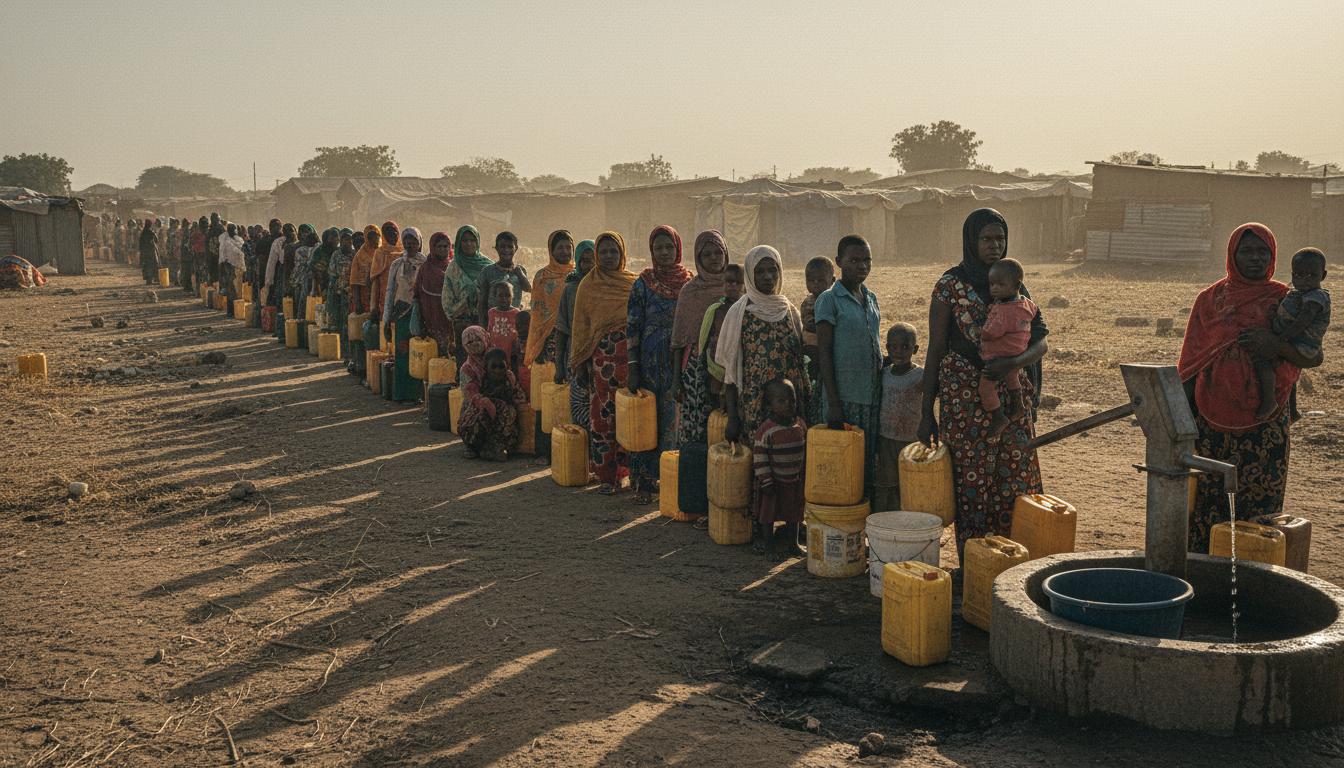
Cape Town, South Africa, came terrifyingly close to Day Zero in 2018. After years of drought, the city’s reservoirs were nearly empty. Officials announced that within months, four million people would have no running water. Residents were restricted to just 50 liters of water per day—that’s about 13 gallons, or roughly what an average American uses in a four-minute shower. People lined up for hours at communal water points. The city teetered on the brink of catastrophe.

It was only strict water restrictions, emergency measures, and some much-needed rainfall that saved Cape Town from becoming the first major city in modern history to completely run out of water. But here’s the scary part: Cape Town wasn’t a one-off event. It was a warning.
Since then, Chennai, India—a city of 11 million people—hit Day Zero in 2019. All four of the city’s major reservoirs ran completely dry. People waited in line for hours to get small allocations of water trucked in from other regions. Hospitals struggled to maintain basic hygiene. Businesses shut down. Life as people knew it ground to a halt.
Sao Paulo, Brazil, faced a similar crisis. Tehran, Iran, is on the brink. Kabul, Afghanistan, could become the first major capital city to completely run out of water. The list goes on and on. These aren’t isolated incidents. They’re the beginning of a terrifying new trend.
According to recent studies, almost three-quarters of drought-prone regions around the world will be at risk of Day Zero events by 2100 if we don’t change course. Even more alarming, a third of these regions could face severe water shortages before 2030. That’s just a few years away. This isn’t a problem for future generations to solve. This is our problem, right now.
Where Is All the Water Going?
You might be wondering: if the Earth is mostly covered in water, how can we possibly be running out? It’s a fair question, and the answer reveals the heart of our problem.
Yes, about 70% of Earth’s surface is water. But here’s the thing: 97.5% of that water is salty ocean water that we can’t drink or use for agriculture without expensive desalination. Of the remaining 2.5% that is freshwater, most of it is locked away in glaciers, ice caps, and deep underground aquifers that are difficult or impossible to access. Less than 1% of all the water on Earth is readily available for human use in rivers, lakes, and shallow groundwater.
And we’re using that tiny fraction at an absolutely unsustainable rate. Agriculture alone consumes about 70% of all freshwater withdrawals globally. Growing food takes enormous amounts of water. A single pound of beef requires roughly 1,800 gallons of water to produce. A pound of almonds needs about 1,900 gallons. Even a simple cup of coffee takes about 37 gallons of water when you account for growing the beans.
Industry uses another significant chunk—about 20% of global freshwater withdrawals. Manufacturing everything from smartphones to cars to clothing requires massive amounts of water. A single semiconductor chip factory can use millions of gallons of water per day. Textile dyeing is one of the most water-intensive industrial processes on Earth.
That leaves just 10% for municipal use—drinking water, showers, toilets, washing machines, and watering our lawns. Yet even this relatively small share is under pressure as urban populations explode. By 2050, nearly 70% of the world’s population will live in cities, up from about 55% today. More people in cities means more demand for water in places where local supplies are often already stretched thin.
The Climate Change Connection
Here’s where things get even more complicated and scary. The global water crisis isn’t happening in isolation. It’s deeply connected to climate change, and the two problems are making each other worse.
Climate change is disrupting the water cycle in profound ways. Higher temperatures mean more evaporation from lakes, rivers, and soil. It means glaciers and snowpacks are melting faster than they can be replenished. It means rainfall patterns are becoming more erratic, with longer droughts punctuated by more intense floods.
Glaciers are often called nature’s water towers. They store water as ice during cold months and release it gradually during warm months, providing a steady supply to rivers that hundreds of millions of people depend on. But since 1970, the world has lost more than 30% of its glacier mass in many regions. Some mountain ranges risk losing functional glaciers entirely within decades. When those glaciers are gone, the rivers they feed will shrink dramatically.
The American West is experiencing this firsthand. The Colorado River, which provides water to 40 million people across seven states and Mexico, is in crisis. Lake Mead and Lake Powell, the massive reservoirs created by dams on the Colorado, are at historic lows. The federal government has had to step in and force states to reduce their water withdrawals. Farmers are fallowing fields. Cities are restricting outdoor watering. The region is facing the reality that the water they thought they could count on simply isn’t there anymore.
Meanwhile, groundwater supplies—the hidden reserves that have sustained agriculture and communities during dry periods—are being depleted at alarming rates. About 70% of the world’s major aquifers show long-term declines. In some places, the land is literally sinking as water is pumped out from underground. This land subsidence now affects more than 6 million square kilometers globally—almost 5% of all land area—and nearly 2 billion people. Once an aquifer is depleted and the ground above it collapses, it can never hold as much water again, even if it’s refilled.
The Human Cost of Water Scarcity
Behind all these statistics and scientific reports are real human beings suffering real consequences. The global water crisis isn’t just an environmental issue or an economic problem. It’s a humanitarian catastrophe that’s unfolding right now.
Nearly 2.2 billion people lack access to safely managed drinking water. That means they’re drinking water that might be contaminated with bacteria, viruses, parasites, or toxic chemicals. Another 3.5 billion people lack safely managed sanitation—functional toilets and sewage systems that keep waste from contaminating water supplies.
The health consequences are devastating. Waterborne diseases like cholera, typhoid, dysentery, and hepatitis A kill an estimated 3.5 million people every year. That’s one person dying every nine seconds from something as preventable as contaminated water. About 900 children under the age of five die every single day from diarrheal diseases caused by unsafe water and poor sanitation. That’s one child every two minutes. Let that sink in. While you’re reading this article, children are dying because they don’t have access to clean water.
Water scarcity also drives displacement and conflict. When water runs out, people have to move. Over 700 million people are projected to be displaced by water scarcity by 2030. That’s more than twice the population of the United States forced to leave their homes because they can’t find water. These climate refugees will flood into cities and across borders, straining resources and potentially sparking conflicts in regions already struggling with political instability.
We’ve already seen water-related conflicts erupt around the world. In Syria, a devastating drought that began in 2006 drove rural farmers into cities, exacerbating tensions that helped spark the civil war. In Yemen, water scarcity has contributed to the ongoing humanitarian crisis. The Darfur conflict in Sudan had roots in competition over water and grazing lands. As water becomes scarcer, these conflicts will only multiply.
The Economic Impact
The global water crisis isn’t just a threat to human health and stability—it’s also an economic time bomb. Water is essential for virtually every industry on Earth. When water becomes scarce or expensive, everything becomes more expensive. Food prices rise as irrigation becomes more difficult. Energy costs climb as power plants struggle to get the water they need for cooling. Manufacturing slows as factories face water restrictions.

The UN estimates that water-related disasters and shortages already cost the global economy around $307 billion per year. That’s more than the annual GDP of most countries. And those costs are only going to rise as water becomes scarcer.
Agriculture is particularly vulnerable. About half of global food production depends on areas where water storage is already declining or unstable. More than 170 million hectares of irrigated cropland—an area larger than France, Spain, Germany, and Italy combined—face high or very high water stress. Salinization, caused by over-irrigation and poor drainage, has degraded another 106 million hectares of cropland worldwide.
When farmers can’t get water, they can’t grow crops. When crops fail, food prices spike. When food prices spike, people go hungry. It’s a simple but brutal chain of cause and effect that threatens food security for billions of people.
Is There Any Hope?
Reading all of this, you might feel overwhelmed and hopeless. The situation is dire, there’s no doubt about that. But here’s the thing: we can still change course. The UN report isn’t just a doomsday prediction—it’s also a call to action. We have the knowledge and technology to solve this crisis. What we need is the will to act.
The first step is recognizing the reality of water bankruptcy. We need to stop pretending that this is a temporary crisis that will fix itself. It’s not. Many of our water systems have been pushed past the point of recovery, and we need to adapt to a new hydrological reality. That means rethinking how we allocate water, how we price it, and how we use it.
We need to stop subsidizing wasteful water practices. Governments around the world spend hundreds of billions of dollars each year on subsidies that encourage farmers and industries to use more water than they need. These subsidies made sense when water seemed abundant, but today they’re accelerating us toward catastrophe. Phasing them out and redirecting that money toward water efficiency and conservation would be a huge step forward.
We need to invest in water infrastructure. Leaky pipes waste enormous amounts of water in cities around the world. In some developing countries, more than half of treated water is lost to leaks before it ever reaches consumers. Fixing those leaks would be like finding new water supplies. We also need to invest in wastewater treatment and recycling systems that can turn sewage into safe drinking water. The technology exists—Singapore has been doing it for years. We just need to scale it up.
We need to reform agriculture, which is by far the biggest water user. That means shifting toward crops that require less water, improving irrigation efficiency, and protecting soil health so it can retain more moisture. It means helping farmers transition to new practices that use water more sustainably. These changes won’t be easy, but they’re essential.
We need to protect and restore natural water systems. Wetlands, forests, and healthy soils act like sponges, absorbing rainfall and releasing it slowly into rivers and aquifers. When we destroy these ecosystems, we lose that natural water storage capacity. Protecting what remains and restoring what we’ve lost is crucial for maintaining water supplies.
And yes, we need to address climate change. The global water crisis and the climate crisis are two sides of the same coin. We can’t solve one without addressing the other. Transitioning to renewable energy, reducing greenhouse gas emissions, and adapting to the changes that are already locked in are all essential parts of the solution.
What Can You Do?
Reading about a global crisis can make you feel powerless. After all, what can one person do about something this big? But here’s the truth: individual actions matter. When millions of people make small changes, those changes add up to something significant.
Start by reducing your own water footprint. Take shorter showers. Fix leaky faucets. Install water-efficient appliances and fixtures. Water your lawn less often, or better yet, replace it with native plants that don’t need irrigation. Every gallon you save is a gallon that remains in the system for someone else to use.
Think about the water embedded in the products you buy. That hamburger required 1,800 gallons of water to produce. Those cotton jeans took about 2,000 gallons. When you choose to eat less meat or buy secondhand clothing, you’re reducing your indirect water use in meaningful ways.
Support policies and politicians that take water seriously. Vote for leaders who understand the urgency of the global water crisis and are willing to make tough decisions about water allocation, pricing, and conservation. Contact your representatives and tell them that water security matters to you.
Support organizations working on water issues. There are countless nonprofits around the world building wells, protecting watersheds, advocating for policy changes, and helping communities adapt to water scarcity. Your donations and volunteer time can make a real difference.
Most importantly, talk about this issue. The global water crisis doesn’t get the attention it deserves because it’s not as immediately dramatic as other disasters. Droughts happen slowly. Water shortages build over years. But the lack of attention doesn’t make the problem any less urgent. By talking about water scarcity with your friends, family, and colleagues, you help raise awareness and build the political will necessary for change.
The Bottom Line
So, will the world run out of water by 2030? The honest answer is: it’s complicated. The world won’t completely run out of water. Water doesn’t disappear from the planet; it cycles through the environment. But that doesn’t mean we’re safe.
What we’re facing is something more insidious and arguably more dangerous: a world where clean, accessible freshwater is increasingly scarce and expensive. A world where billions of people struggle to find enough water for their basic needs. A world where food prices spike, economies falter, conflicts erupt, and millions suffer because we failed to protect our most precious resource.
The UN report makes it clear: we are already living in an era of water bankruptcy. The question isn’t whether we’ll face water scarcity—we already are. The question is how bad we’ll let it get before we take meaningful action.
By 2030, global freshwater demand will exceed supply by 40% if we continue on our current path. Day Zero events will become more common. More cities will face water emergencies. More people will suffer and die from water-related diseases and conflicts. The suffering will be concentrated among the world’s poorest and most vulnerable populations, but no one will be entirely immune.
But here’s the thing: that future isn’t set in stone. We have the knowledge, technology, and resources to chart a different course. What we need now is the courage to face reality and the will to act. The clock is ticking. The water is running out. And what we do in the next few years will determine whether 2030 marks the beginning of a global water catastrophe or the turning point toward a more sustainable future.