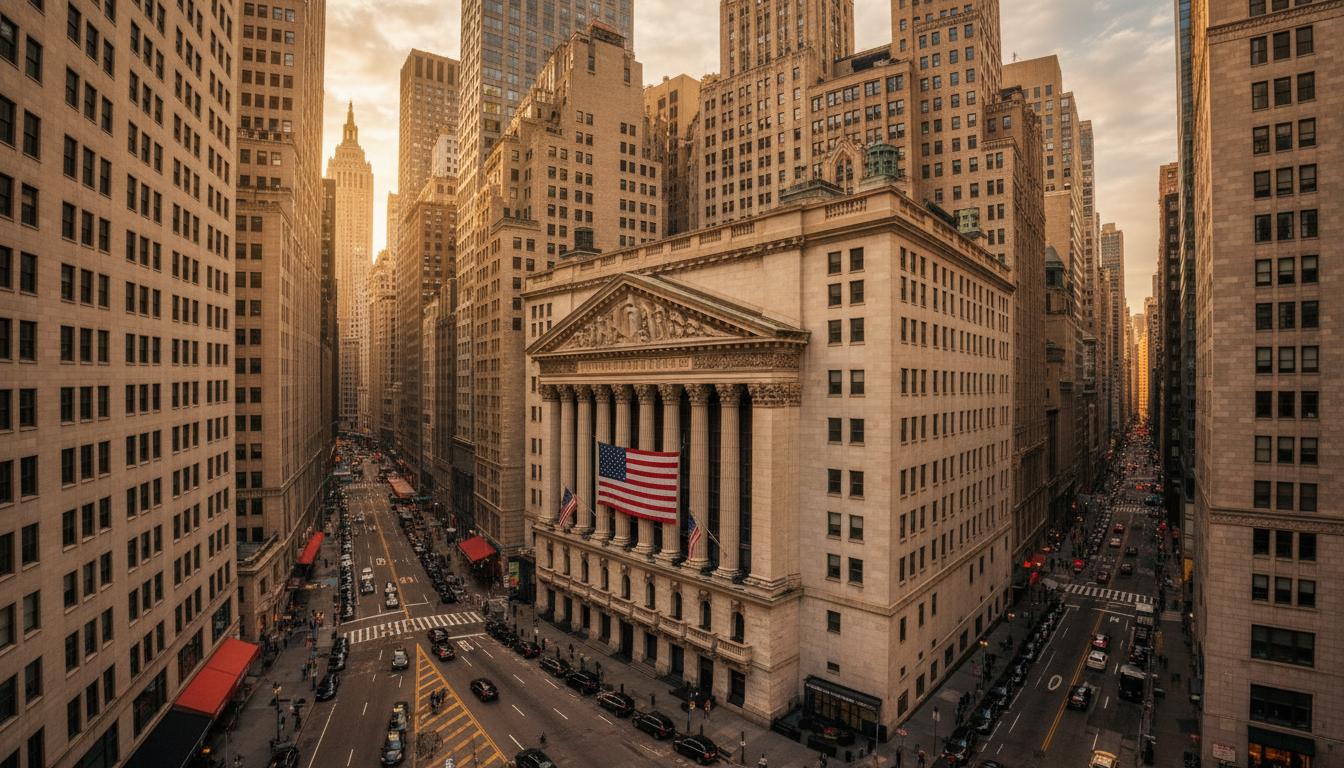
Wall Street. Just eight letters, yet they carry the weight of empires, the dreams of millions, and the fears of nations. This narrow thoroughfare in Lower Manhattan, stretching barely eight blocks from Broadway to South Street, has become synonymous with American capitalism, financial power, and the intricate machinery that drives the global economy. But what exactly is Wall Street? Is it merely a physical location, or has it evolved into something far more complex and influential?
To understand Wall Street is to understand the heartbeat of modern finance. It is where fortunes are made and lost in milliseconds, where the decisions of a few can affect the lives of billions, and where the invisible threads of money, power, and influence weave together to create the tapestry of our economic reality. This article peels back the layers of mystique surrounding Wall Street, revealing both its visible structures of power and the hidden mechanisms that operate in the shadows.
The story of Wall Street is not merely a tale of numbers and transactions. It is a story of human ambition, of innovation and excess, of crashes and recoveries, and of a system that continues to evolve in ways that even its most sophisticated participants struggle to fully comprehend. From its humble beginnings under a buttonwood tree to the algorithm-driven trading floors of today, Wall Street has transformed itself repeatedly, each iteration bringing new opportunities and new risks.
Today, Wall Street represents a complex ecosystem of investment banks, hedge funds, private equity firms, stock exchanges, and regulatory bodies, all interconnected in a web of financial relationships that span the globe. The decisions made on this street affect interest rates, currency values, commodity prices, and ultimately, the economic well-being of people in every corner of the world. Understanding this system is essential not just for investors and financial professionals, but for anyone who participates in the modern economy.
The Birth of an Empire: Historical Origins
The Buttonwood Agreement of 1792
The origins of Wall Street as we know it today can be traced to a single day in May 1792, when twenty-four brokers gathered beneath a buttonwood tree (an American sycamore) near what is now 68 Wall Street. These men, representing various religious backgrounds and countries of origin, signed a simple two-sentence agreement that would forever change the landscape of American finance.
The Buttonwood Agreement emerged from the chaos of the Financial Panic of 1792, triggered by reckless lending practices and speculative attempts to manipulate the debt securities market. William Duer, a former U.S. Treasury official, along with Alexander Macomb, had attempted to corner the market in Bank of the United States securities. When their scheme failed and they defaulted on their obligations, the markets collapsed, causing widespread financial distress.
The agreement itself was remarkably straightforward. The signatories pledged to charge a fixed commission of 0.25% on trades and to give preference to each other in their negotiations. This simple arrangement created a central market for listed securities, established uniform pricing, and gave members a monopoly on trading those securities. What began as a defensive measure against market chaos evolved into the foundation of the New York Stock Exchange.
What is particularly noteworthy about the original signatories is their diversity. Six of the twenty-four signatories were Sephardic Jews, including Benjamin Seixas, Isaac Gomez, Alexander Zuntz, and Ephraim Hart. The Jewish community had strongly supported the Revolutionary cause and continued to do so in post-Revolution New York. This diversity among the founding members set a precedent for Wall Street as a meritocratic institution where talent and capital mattered more than background or social standing.
From Coffee Houses to Skyscrapers
In 1793, the brokers moved their operations to the Tontine Coffee House at 100 Wall Street, a building that would serve as their headquarters until 1817. That year, the group formally organized as the New York Stock and Exchange Board, adopting a constitution and establishing regular trading hours. By 1863, they adopted the name that would become legendary: the New York Stock Exchange.
The early years saw relatively modest trading volumes. In 1792, only five securities were traded, with the Bank of New York being the first listed company. But as the United States expanded westward and industrialized, the demand for capital grew exponentially. By the end of the 1790s, hundreds of companies sought investors to back plans for roads, bridges, canals, mines, furnaces, and factories. Hamilton’s bonds traded alongside stocks for Hamilton’s banks, creating a vibrant marketplace that would only continue to expand.
The fixed commissions established by the Buttonwood Agreement remained a feature of Wall Street for nearly two centuries, lasting until 1975 when the Securities and Exchange Commission abolished them. For almost 200 years, these rules gave exchange members a significant competitive advantage in securities trading, cementing Wall Street’s position as the center of American finance. The creation of a central auction market with uniform prices would eventually create an entity where companies could efficiently raise capital for their business purposes.
The Architecture of Power: Who Really Controls Wall Street
The Investment Banking Giants
When most people think of Wall Street power, they envision the towering headquarters of Goldman Sachs, JPMorgan Chase, and Morgan Stanley. These institutions have become the public face of American finance, and their influence extends far beyond traditional banking services. But the true extent of their power is often misunderstood by the general public.
A 2015 Senate investigation revealed the shocking scope of these banks’ involvement in physical commodities. Goldman Sachs, JPMorgan Chase, and Morgan Stanley had engaged in billions of dollars of risky physical commodity activities, owning or controlling vast inventories of crude oil, jet fuel, heating oil, natural gas, copper, aluminum, and even uranium. They owned power plants, coal mines, natural gas facilities, and oil and gas pipelines, blurring the lines between banking and commerce in ways that would have been unthinkable just decades earlier.
The numbers are staggering. Morgan Stanley controlled over 55 million barrels of oil storage capacity, 100 oil tankers, and 6,000 miles of pipeline. JPMorgan built a copper inventory that peaked at $2.7 billion, comprising nearly 60% of the available physical copper on the world’s premier copper trading exchange. Goldman Sachs owned warehouses controlling 85% of the LME aluminum storage business in the United States. These holdings gave these banks unprecedented influence over commodity prices and access to commercially valuable, non-public information that could provide advantages in their trading activities.
The investigation also revealed how these banks gained trading advantages through their physical commodity activities. Morgan Stanley’s oil storage and transport activities gave it access to information about oil shipments, storage fill rates, and pipeline breakdowns. Goldman’s warehouse business gave over 50 Goldman employees access to confidential warehouse information about aluminum shipments, storage volumes, and warrant cancellations. JPMorgan’s power plants gave it insights into electricity costs, congestion areas, and power plant capabilities and shutdowns, all of which could be used to advantage in trading activities.
The Revolving Door
One of the most powerful yet least visible mechanisms of Wall Street influence is the revolving door between the financial industry and government regulatory agencies. This phenomenon, where individuals move seamlessly between positions in banks and positions in government, has profound implications for how financial markets are regulated.
The relationship between Wall Street and the Federal Reserve exemplifies this dynamic. Research has shown that a 10% stock market decline predicts a 32 basis point rate cut at the next Federal Open Market Committee meeting and 127 basis points of cumulative cuts over the following year. The effect is strikingly asymmetric: when markets fall, the Fed eases; when markets rise, there is no corresponding tightening. This pattern, documented in landmark research published in the Review of Financial Studies, suggests that the Federal Reserve has become increasingly responsive to market conditions in ways that benefit Wall Street.
The nomination of Kevin Warsh to chair the Federal Reserve in 2025 highlighted this connection. Warsh had spent seven years in Morgan Stanley’s mergers and acquisitions unit before becoming the youngest Fed governor in history at age 35. On September 20, 2008, when Morgan Stanley was on the brink of collapse, Warsh received an ethics waiver to negotiate directly with his former employer as a Fed governor. The next day, the Fed approved Morgan Stanley to convert to a bank holding company, gaining access to Fed loans that saved the firm.
This revolving door phenomenon extends throughout the regulatory apparatus. Former bank executives populate the upper ranks of the Treasury Department, the Securities and Exchange Commission, and the Commodity Futures Trading Commission. Their presence raises legitimate questions about whether regulators truly act in the public interest or whether they are too sympathetic to the industry they once served and may serve again in the future.
The Hidden World: Secrets of Modern Trading

Figure 2: The invisible networks of high-frequency trading and dark pools that operate beyond public view.
Dark Pools and High-Frequency Trading
Beneath the visible surface of Wall Street lies a hidden world of trading that most investors never see. Dark pools, private exchanges where institutional investors can trade large blocks of shares without revealing their intentions to the public market, have become a significant part of the trading landscape. These venues were originally created to protect large investors from front-running, where other traders would detect large orders and trade ahead of them to profit from the price movement.
However, investigations have revealed that dark pools may not provide the protection they promise. In 2016, Barclays and Credit Suisse settled charges that they had misled clients about the extent of high-frequency trading in their dark pools. Barclays marketed a “Liquidity Profiling” service that allowed traditional investors to opt out of trading with aggressive high-speed traders, but the bank used a system of overrides that moved some high-frequency trading clients to less aggressive categories. Clients who thought they were trading only against the safest counterparties were instead trading with some of the most aggressive and predatory high-speed traders.
Credit Suisse created and operated an undisclosed platform that secretly enabled two high-frequency trading firms to trade directly with orders submitted by other Credit Suisse clients. The bank accepted, ranked, and executed over 117 million illegal sub-penny orders through this platform. As one expert noted, “Dark pools were supposedly the great reform that would protect regular investors. It turns out that these dark pools that had been sold as the saviors and protectors of small investors were actually cutting secret deals with the high-frequency traders.”
The Speed Advantage
High-frequency trading firms use sophisticated algorithms and ultra-fast connections to execute trades in microseconds, giving them advantages that human traders cannot match. These firms can detect large orders entering the market, split their own orders across multiple exchanges, and complete their trades before the original order is fully executed, effectively front-running institutional investors.
The development of law has progressed steadily in areas such as fraud and insider trading, but not in high-frequency trading. Even by their very names, dark pools and high-frequency trading have become “mysterious unknowns” as they continue to grow. High-frequency trading now constitutes more than half of all equity trading, and even more on the futures market, yet regulation has struggled to keep pace with these technological innovations.
The speed advantage extends beyond just execution. High-frequency traders pay for co-location services, placing their servers physically close to exchange servers to gain microsecond advantages. They subscribe to proprietary data feeds that give them market information before it reaches the public. These advantages, while individually small, accumulate into significant edges that extract profits from traditional investors.
When the System Breaks: Market Crashes and Their Lessons
The Crash of 1929
No discussion of Wall Street would be complete without examining its darkest moments. The stock market crash of 1929 remains the most infamous collapse in market history, with the Dow Jones Industrial Average losing 89.2% of its value by 1932. The crash was preceded by the “Hoover bull market,” where stock prices soared to fantastic heights and the public, from banking magnates to chauffeurs and cooks, rushed to invest their savings.
Billions of dollars were drawn from banks into Wall Street for brokers’ loans to carry margin accounts. By the summer of 1929, some 300 million shares of stock were being carried on margin, pushing the Dow to a peak of 381 points in September. When prices began to decline, the wild rush to buy stocks gave way to an equally wild rush to sell. On Black Thursday, October 24, a record 12.9 million shares were traded. On Black Tuesday, October 29, more than 16 million shares changed hands, and the Dow lost another 12%, closing at 198.
The aftermath was devastating. The United States entered the Great Depression, which spread globally for nearly a decade. Millions lost their jobs, and the financial system was reshaped by sweeping reforms. The crash led to the creation of the Securities and Exchange Commission and the Glass-Steagall Act, which separated commercial and investment banking.
The lessons of 1929 remain relevant today. Excessive leverage can magnify losses dramatically. Market confidence can evaporate overnight. Strong regulation emerged as a necessary safeguard, though the effectiveness of that regulation continues to be debated. The crash also demonstrated that stock market crashes, while devastating, are not necessarily the direct cause of broader economic depressions, as the banking crisis that followed played an equally important role.
The 2008 Financial Crisis
The Global Financial Crisis of 2008 was one of the worst economic downturns since 1929. It was triggered by the collapse of risky mortgage lending and spread worldwide. Lehman Brothers’ bankruptcy in September 2008 sparked panic, leading to massive government bailouts and stimulus packages to stabilize markets.
The crisis revealed the dangers of systemic risk and the ways that leverage can amplify downturns dramatically. Central bank actions shaped the recovery speed, with Federal Reserve Chairman Ben Bernanke’s study of the 1930s proving crucial in preventing a repeat of the Great Depression. The Fed’s interventions added significant liquidity to the economy, supporting the stock market in ways that prevented a complete collapse.
The 2008 crisis also exposed the political influence of the financial industry. Research found that lenders that undertook heavy lobbying efforts between 2000 and 2006 tended to engage more than other institutions in risky lending practices and suffered worse outcomes during the crisis. The financial industry spent close to $200 million on lobbying efforts in 2012 alone, with Goldman Sachs meeting with federal regulators nearly 100 times to influence the implementation of the Dodd-Frank financial reform law.
The response to the crisis included the Dodd-Frank Wall Street Reform and Consumer Protection Act, which overhauled the financial regulatory system. However, bank lobbyists did not sit on the sidelines while the reform was being crafted. President Obama stated that “passing this bill was no easy task. To get there, we had to overcome the furious lobbying of an array of powerful interest groups determined to block change.” Even after the bill’s passing, bank lobbyists continued to pressure regulators to relax provisions and restrictions.
The Shadow Game: Insider Trading and Market Manipulation
Notorious Cases
Wall Street’s history is punctuated by spectacular cases of insider trading and market manipulation that have shaped public perception of the financial industry. Ivan Boesky, a prominent arbitrageur in the 1980s, made over $200 million by trading on tips about mergers and acquisitions from investment bankers and corporate insiders. His prosecution triggered a wave of investigations and led to significant reforms in Wall Street regulation.
Raj Rajaratnam, founder of the Galleon Group hedge fund, orchestrated one of the largest insider trading schemes in U.S. history. He built a network of insiders at companies like IBM and Goldman Sachs, trading on confidential information and generating tens of millions in profits. In 2011, Rajaratnam was convicted on 14 counts of conspiracy and securities fraud and received an 11-year prison sentence.
The Enron scandal, while primarily an accounting fraud case, also involved illegal insider trading by executives like Jeffrey Skilling, who sold about $60 million in company stock before the public learned of Enron’s dire financial situation. The scandal led to the Sarbanes-Oxley Act, a landmark reform of corporate governance and financial reporting standards.
Martha Stewart’s case, though involving a relatively small amount of money, brought insider trading into the public consciousness. In 2001, Stewart sold nearly 4,000 ImClone Systems shares after her broker told her that the FDA would reject the company’s cancer drug application, avoiding a loss of about $45,000. She was convicted not for insider trading but for obstruction of justice and lying to investigators, serving five months in prison.
The Regulatory Response
These scandals have driven significant financial reforms. The Insider Trading and Securities Fraud Enforcement Act of 1988 increased insider trading penalties and expanded the SEC’s enforcement powers. The Sarbanes-Oxley Act of 2002 introduced stricter financial disclosure requirements, established the Public Company Accounting Oversight Board, mandated internal controls, and enhanced penalties for white-collar crimes.
Despite these reforms, questions remain about the effectiveness of enforcement. Critics argue that settlements, while generating headlines, do little to change behavior. As one expert noted, “Instead of settling with the investment firms over violations, regulators must contest the cases, even if they ultimately lose those cases, and thereby create precedents. The creation of precedents is one of the geniuses of the Anglo-Saxon system that produces efficiency.”
The challenge of policing modern markets is compounded by their complexity. When trading occurs in microseconds across multiple venues around the globe, detecting and proving manipulation becomes extraordinarily difficult. Regulators must constantly play catch-up with financial innovators who have every incentive to find and exploit loopholes in the rules.
The Future of Wall Street
As we look to the future, Wall Street faces unprecedented challenges and opportunities. The rise of cryptocurrency and decentralized finance threatens to disrupt traditional banking models. Artificial intelligence and machine learning are transforming trading strategies and risk management. Climate change is creating new categories of financial risk and opportunity.
The relationship between Wall Street and Main Street remains a central tension in American politics. The 2008 crisis eroded public trust in financial institutions, and subsequent scandals have done little to rebuild it. Yet Wall Street continues to exercise enormous influence over economic policy, regulatory frameworks, and the allocation of capital.
Understanding Wall Street, its power structures, and its secrets is not merely an academic exercise. It is essential for anyone who participates in the modern economy, whether as an investor, a worker, a consumer, or a citizen. The decisions made on this narrow street in Lower Manhattan affect us all, and the more we understand about how those decisions are made, the better equipped we are to navigate the financial landscape of the 21st century.
The power and secrets of Wall Street will continue to evolve, but the fundamental dynamics of greed, fear, and the pursuit of profit will remain constant. As they have for over two centuries, these forces will shape markets, influence governments, and determine the economic fate of nations. The story of Wall Street is far from over, and the next chapter promises to be as dramatic and consequential as any that have come before.
For the average person, the lessons are clear: diversify your investments, be wary of products you do not understand, and remember that if something seems too good to be true, it probably is. Wall Street will always be a place of both opportunity and danger, where the informed and the cautious can prosper, while the greedy and the naive may find themselves ruined. The key is to approach it with eyes wide open, understanding both its tremendous potential and its inherent risks.
The Retail Investor Revolution
The landscape of Wall Street is undergoing another dramatic transformation with the rise of the retail investor. Commission-free trading platforms, social media communities, and accessible financial information have democratized access to markets in ways that were unimaginable just a decade ago. The GameStop phenomenon of 2021, where retail investors organized through Reddit’s WallStreetBets forum to drive up the stock price and squeeze hedge funds that had heavily shorted the company, demonstrated the potential power of coordinated small investors.
This retail revolution has forced Wall Street to adapt. Traditional brokerages have eliminated commissions to compete with free-trading apps. Investment firms are paying closer attention to social media sentiment as a market-moving factor. Regulators are grappling with how to protect retail investors without stifling their newfound access to markets. The balance of power, while still heavily tilted toward institutional investors, has shifted in subtle but meaningful ways.
However, the retail revolution also carries risks. Many new investors lack the experience and knowledge to navigate complex markets, making them vulnerable to losses and manipulation. The gamification of trading apps, with their confetti animations and push notifications, can encourage excessive trading and risk-taking. The same social media communities that enabled coordinated action can also spread misinformation and pump-and-dump schemes. As with any democratization of power, the benefits come with new challenges.
Cryptocurrency and the Decentralized Challenge
Perhaps the most significant challenge to Wall Street’s dominance comes from the world of cryptocurrency and decentralized finance. Bitcoin, Ethereum, and thousands of other digital assets have created an entirely new asset class that operates largely outside the traditional financial system. Decentralized exchanges, lending protocols, and yield farming platforms offer alternatives to traditional banking services without the need for intermediaries.
Wall Street’s response to this challenge has been complex. Initially dismissive, major banks and investment firms have gradually warmed to cryptocurrency, offering custody services, futures trading, and investment products tied to digital assets. Some see cryptocurrency as a threat to be co-opted, others as a new market opportunity to be exploited. The regulatory framework remains uncertain, with regulators struggling to apply traditional securities laws to novel digital instruments.
The underlying blockchain technology that powers cryptocurrency also has profound implications for Wall Street’s future. Smart contracts could automate many of the functions currently performed by intermediaries. Tokenization could make previously illiquid assets, from real estate to fine art, tradable on digital platforms. Settlement times could be reduced from days to minutes or even seconds. Whether these innovations strengthen Wall Street’s position or ultimately render it obsolete remains to be seen.
Knowledge as Power
The power and secrets of Wall Street have fascinated and intimidated the public for over two centuries. From the Buttonwood Agreement to the high-frequency trading algorithms of today, the mechanisms of financial power have evolved dramatically, but the fundamental dynamics remain constant. Those who understand the system have advantages over those who do not. Information, access, and influence continue to determine who profits and who loses.
This article has only scratched the surface of Wall Street’s complexity. The derivatives markets, the repo market, the foreign exchange markets, and countless other specialized areas each have their own rules, players, and secrets. The regulatory framework, spanning dozens of agencies and thousands of pages of rules, creates both protections and loopholes. The international dimension, with London, Hong Kong, Tokyo, and other financial centers interconnected with New York, adds layers of complexity.
Yet for all its complexity, Wall Street serves an essential function in the modern economy. It allocates capital to productive enterprises, enables businesses to manage risk, and provides opportunities for individuals to build wealth. When it functions well, it drives economic growth and innovation. When it functions poorly, as it did in 1929 and 2008, the consequences can be catastrophic.
The challenge for society is to harness the benefits of Wall Street while minimizing its risks and excesses. This requires effective regulation, transparent markets, and an informed public. It requires holding wrongdoers accountable, whether they are small-time fraudsters or executives of too-big-to-fail institutions. It requires recognizing that Wall Street’s interests are not always aligned with the public interest, and that vigilance is necessary to prevent the financial system from being captured by narrow private interests.
For the individual investor, the most important weapon is knowledge. Understanding how markets work, recognizing the difference between investing and speculating, and maintaining a long-term perspective can help navigate the treacherous waters of modern finance. The secrets of Wall Street are not truly secret, they are simply complex and often obscured by jargon and misdirection. Those willing to do the work of learning can level the playing field, if only slightly.
Wall Street will continue to evolve, shaped by technology, regulation, and the eternal human emotions of greed and fear. New instruments will be invented, new scandals will emerge, and new fortunes will be made and lost. The story is never truly over, it simply enters new chapters. For those who pay attention, the lessons of history provide a guide to navigating the future. For those who ignore them, the consequences can be severe. The power of Wall Street is real, but it is not absolute. With knowledge, caution, and discipline, anyone can participate in the financial markets and potentially share in the wealth they create.