In today’s consumer-driven economy, access to credit has become as commonplace as the air we breathe. From buying groceries to financing dream vacations, credit cards and personal loans have woven themselves into the fabric of modern financial life. But beneath the convenience and immediate gratification lies a dangerous truth that millions of Americans are discovering too late: not all debt is created equal, and some forms of borrowing can lead to financial ruin faster than you might imagine.
The choice between credit cards and personal loans is one that confronts nearly every adult at some point in their financial journey. Whether you are facing an unexpected medical expense, planning a home renovation, or simply trying to consolidate existing debt, understanding the real dangers hidden within these financial products can mean the difference between achieving your goals and falling into a debt trap from which escape seems impossible.
This comprehensive guide will take you on a journey through the complex landscape of consumer credit, revealing the hidden costs, psychological traps, and long-term consequences that lenders do not advertise in their glossy marketing materials. By the end, you will have the knowledge to make informed decisions that protect your financial future rather than jeopardize it.
The information presented here is based on current market data, financial research, and real-world examples that illustrate the profound impact these financial products can have on your life. Whether you are a young adult just starting to build credit, a middle-aged professional managing multiple financial obligations, or someone nearing retirement concerned about debt, the principles outlined in this guide apply to you.
Focus Keywords: credit card debt, personal loan comparison, high interest rates, debt consolidation, financial danger, consumer credit risks, APR comparison, debt trap, revolving credit, installment loans, minimum payment trap, compound interest
How Credit Cards Work
Credit cards operate on a deceptively simple premise. When you swipe your card, the issuer pays the merchant on your behalf, and you agree to repay that amount to the issuer, typically within a billing cycle of about 30 days. This revolving line of credit allows you to borrow repeatedly up to a predetermined limit, making credit cards incredibly convenient for everyday purchases and emergencies alike.
The mechanics of credit card billing can be confusing even for experienced users. Each month, you receive a statement showing your balance, minimum payment due, and payment due date. Here is where the danger begins to creep in. The minimum payment is typically calculated as a small percentage of your outstanding balance, usually between 2% and 4%, plus any interest and fees. While making only the minimum payment keeps your account in good standing, it also ensures that you will remain in debt for years, if not decades.
Credit cards charge interest on any balance you carry beyond the grace period, which is typically 21 to 25 days from the end of your billing cycle. This interest compounds daily, meaning that each day, interest is calculated on your balance plus any interest that has already accrued. This compounding effect is one of the most dangerous aspects of credit card debt, causing balances to grow exponentially even when you are making regular payments.
To truly understand the mechanics, consider how daily compounding works. If your credit card has an APR of 24%, the daily periodic rate is approximately 0.066%. This might seem small, but when applied to your balance every single day, the effect is dramatic. A $5,000 balance would accrue about $3.30 in interest on the first day. The next day, interest is calculated on $5,003.30, not just the original $5,000. Over the course of a month, this compounding adds up to significant amounts, and over years, it can double or triple the original debt.
The True Cost of Credit Card Debt
To understand the real danger of credit card debt, you must look beyond the advertised interest rates and examine the actual costs over time. As of early 2025, the average annual percentage rate (APR) on credit cards ranges from approximately 21% to over 27%, depending on your creditworthiness and the type of card. For accounts that are actively accruing interest, the average APR has climbed to nearly 23%, a figure that would have seemed astronomical just a few decades ago.
Consider this sobering example: If you carry a balance of $7,000 on a credit card with a 24% APR and make only the minimum payments, you will spend approximately $10,000 in interest alone over the 20-plus years it takes to pay off the debt. Your $7,000 purchase will ultimately cost you more than $17,000. This is not a hypothetical scenario; it is the reality facing millions of American households today.
The statistics paint a disturbing picture. Americans collectively carry over $1.21 trillion in credit card debt as of 2025, a figure that has risen by more than 30% since before the pandemic. The average cardholder with an unpaid balance owes approximately $7,300, and nearly half of all credit card users carry a balance from month to month. Even more alarming, about 23% of cardholders report having no clear plan for repaying their debt.
Credit card companies have become masters of psychological manipulation, designing their products to encourage spending while obscuring the true costs. The convenience of contactless payments, the allure of rewards programs, and the normalization of carrying debt have created a perfect storm that traps consumers in cycles of borrowing that can feel impossible to escape. The rewards you earn, typically 1% to 2% of purchases, pale in comparison to the 20% or more you pay in interest if you carry a balance.
Another hidden cost of credit cards is the impact on your credit score. Credit utilization, the ratio of your credit card balances to your credit limits, accounts for approximately 30% of your FICO score. Financial experts recommend keeping your utilization below 30%, but ideally below 10%. High utilization not only lowers your credit score but can also trigger penalty APRs, which can exceed 29% on some cards.
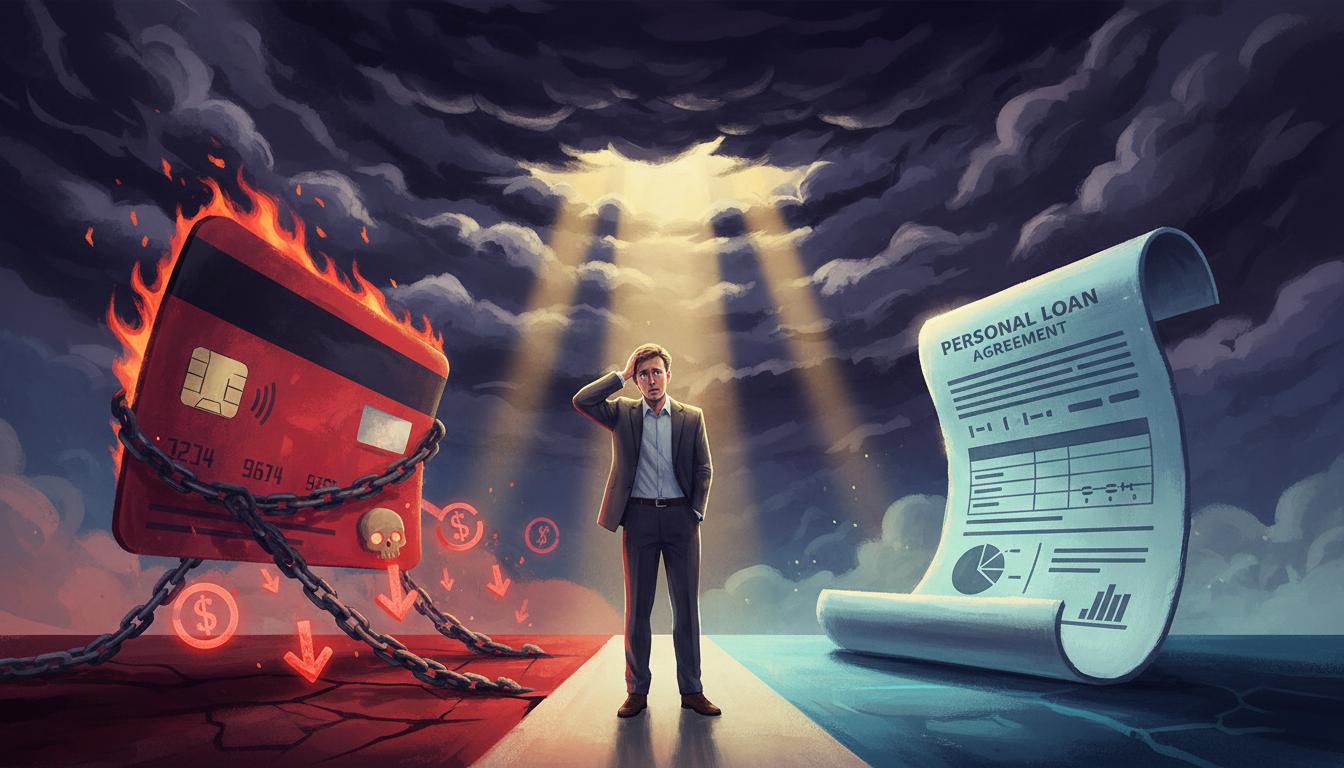
Figure 1: The crossroads of credit decisions – choosing between the danger of credit cards and the structure of personal loans
How Personal Loans Work
Personal loans represent a fundamentally different approach to borrowing. Unlike credit cards, which provide a revolving line of credit, personal loans are installment loans. This means you receive a lump sum of money upfront and repay it through fixed monthly payments over a predetermined period, typically ranging from two to seven years.
The structure of personal loans offers several advantages over credit cards that become apparent when you examine the details. First and foremost, personal loans almost always come with fixed interest rates. This means your rate will not change over the life of the loan, providing predictability that credit cards, with their variable rates, cannot match. When you sign your loan agreement, you know exactly how much you will pay each month and exactly when the debt will be fully repaid.
Personal loans are typically unsecured, meaning they do not require collateral such as a house or car. This distinguishes them from mortgages or auto loans, where the lender can seize your property if you fail to repay. However, because personal loans are unsecured, lenders rely heavily on your creditworthiness when determining whether to approve your application and what interest rate to offer.
The application process for a personal loan is straightforward but requires more documentation than applying for a credit card. You will need to provide proof of income, employment verification, and authorization for the lender to check your credit report. The lender will evaluate your debt-to-income ratio, credit score, and credit history to determine your eligibility and interest rate. This more rigorous screening process helps ensure that borrowers do not take on more debt than they can reasonably handle.
Personal Loan Interest Rates
The interest rates on personal loans vary widely based on your credit score, income, debt-to-income ratio, and other factors. For borrowers with excellent credit, rates can start as low as 7% to 8%. For those with fair or poor credit, rates can climb to 25% or even 36%, approaching credit card territory. However, even at the higher end, personal loans often provide advantages over credit cards due to their fixed rates and defined repayment terms.
The key to understanding personal loan rates is recognizing that these loans are designed for specific purposes and timeframes. When you take out a personal loan, you are making a commitment to repay the debt within a set period. This structure inherently discourages the kind of open-ended borrowing that makes credit cards so dangerous. You cannot add to a personal loan balance the way you can with a credit card, which means you cannot dig yourself deeper into debt without consciously applying for a new loan.
Personal loans also typically have lower fees than credit cards. While some lenders charge origination fees, these are usually one-time costs deducted from the loan proceeds, typically ranging from 1% to 8% of the loan amount. You will not face the annual fees, late payment fees, over-limit fees, and foreign transaction fees that credit card companies routinely charge. This simpler fee structure makes it easier to understand the true cost of borrowing.
Another advantage of personal loans is that they do not affect your credit utilization ratio. Since personal loans are installment loans, not revolving credit, the amount you owe does not factor into the utilization calculation that heavily influences your credit score. This can be particularly beneficial if you are using a personal loan to consolidate credit card debt, as paying off those cards can significantly improve your credit utilization and boost your credit score.
The Real Danger: A Side-by-Side Comparison
Interest Rate Comparison
When comparing credit cards and personal loans, the numbers tell a compelling story. The average APR for new credit card offers currently sits at approximately 24.19%, with the range extending from around 20.63% for borrowers with excellent credit to over 27.76% for those with poor credit. For accounts that are actively accruing interest, the average has reached 22.83% and continues to climb.
Personal loans, by contrast, offer APRs ranging from approximately 7% to 36%. While the upper end of this range overlaps with credit cards, borrowers with good to excellent credit can secure rates significantly lower than any credit card offer. Even more importantly, personal loan rates are fixed, meaning they will not increase if market conditions change or if you miss a payment.
The impact of these rate differences over time is staggering. Consider a $10,000 debt repaid over five years. At a 24% credit card APR with minimum payments, you would pay approximately $8,000 in interest. The same amount borrowed through a personal loan at 10% APR would cost you roughly $2,700 in interest. That is a difference of more than $5,300, money that could fund an emergency fund, retirement contributions, or other financial goals.
Let us look at another example. Suppose you have $15,000 in credit card debt spread across multiple cards with an average APR of 22%. If you make minimum payments of approximately $450 per month, it would take you nearly 24 years to pay off the debt, and you would pay over $22,000 in interest alone. By consolidating this debt into a five-year personal loan at 11% APR with a monthly payment of about $325, you would be debt-free in five years and pay only about $4,500 in interest, saving more than $17,000.
Repayment Structure Analysis
Perhaps the most significant difference between credit cards and personal loans lies in their repayment structures. Credit cards are designed to keep you in debt indefinitely. The minimum payment system ensures that you are always making progress so slow that the debt feels permanent. As you pay down your balance, your minimum payment decreases, tempting you to pay less and extending your repayment timeline even further.
Personal loans, on the other hand, are designed to be paid off. Your monthly payment remains constant throughout the loan term, with each payment covering both principal and interest. In the early months, more of your payment goes toward interest, but as the principal decreases, an increasing portion of each payment reduces your balance. This amortization schedule ensures that you make steady progress toward becoming debt-free.
The psychological impact of these different structures cannot be overstated. Credit card debt feels endless because, for many people, it is. The open-ended nature of revolving credit makes it easy to add new charges even as you are trying to pay off old ones. Personal loans create a clear endpoint, a light at the end of the tunnel that can motivate you to stay on track with your payments.
Consider the behavioral economics at play. With credit cards, each payment feels like a drop in the bucket because the balance barely seems to move. With personal loans, you can see tangible progress as the principal decreases with each payment. This visible progress creates positive reinforcement that encourages continued responsible behavior.
Key Differences at a Glance:
| Feature | Credit Cards | Personal Loans |
|---|---|---|
| Interest Rate | 20% – 28% (variable) | 7% – 36% (fixed) |
| Repayment Term | Open-ended (minimum payments) | Fixed term (2-7 years) |
| Monthly Payment | Varies (2-4% of balance) | Fixed amount |
| Ability to Add Debt | Can continue charging | Cannot add to balance |
| Best Used For | Small purchases, emergencies | Large expenses, debt consolidation |
| Total Cost Risk | Very high if carrying balance | Known upfront |
Credit Card Debt Traps
Credit card companies employ sophisticated psychological tactics designed to separate you from your money. The rewards programs that seem so appealing are, in reality, carefully calculated to encourage spending. Studies have shown that consumers spend more when using credit cards than when using cash, a phenomenon known as the “credit card premium.” The abstract nature of plastic money makes it easier to part with than physical bills, and the promise of cashback or points provides just enough justification to override our better judgment.
The minimum payment trap is perhaps the most insidious aspect of credit card debt. By setting minimum payments so low, typically around 2% to 4% of the balance, credit card companies ensure that you will pay the maximum amount of interest over the longest possible time. A $5,000 balance at 24% APR with a 2% minimum payment would take over 30 years to pay off, costing more than $12,000 in interest alone.
Credit card companies also exploit our tendency toward present bias, the cognitive bias that causes us to prioritize immediate gratification over long-term consequences. When you are standing in a store holding an item you want, the future cost of paying interest feels abstract and distant. The immediate pleasure of the purchase feels real and compelling. This mismatch in how we perceive present and future costs leads to decisions we later regret.
Another psychological trap is the normalization of debt. Credit card companies market their products as essential tools for modern life, and society has largely accepted carrying balances as normal. This normalization makes it easier to justify accumulating debt and harder to recognize when you have crossed the line from convenience to danger. The phrase “everyone has debt” becomes a self-fulfilling prophecy that keeps people trapped in cycles of borrowing.
The convenience features of modern credit cards, including contactless payments, mobile wallets, and one-click purchasing, further distance us from the reality of spending. When paying is as easy as tapping your phone, the psychological pain of parting with money is minimized, making impulse purchases more likely. These features are designed not for your convenience but to increase transaction volume and, consequently, the fees and interest that generate profits for credit card companies.
When Personal Loans Become Dangerous
While personal loans are generally safer than credit cards, they are not without risks. The primary danger lies in using personal loans to free up credit card capacity, only to run up new credit card balances. This pattern, known as debt stacking or debt churning, can leave you with both a personal loan payment and new credit card debt, doubling your financial burden.
Personal loans can also be dangerous when borrowers do not fully understand the terms. Some lenders charge prepayment penalties, fees for paying off your loan early. Others advertise low rates but charge high origination fees that effectively increase the cost of borrowing. Reading the fine print and understanding all fees and charges is essential before signing any loan agreement.
Another risk emerges when borrowers use personal loans for discretionary spending rather than necessary expenses or debt consolidation. Taking out a loan to fund a vacation or buy luxury items creates debt obligations for purchases that do not improve your financial position. This type of borrowing can quickly spiral out of control, especially if you develop a habit of using loans to fund a lifestyle you cannot afford.
Predatory lenders pose another threat in the personal loan market. Some lenders target borrowers with poor credit, offering loans with exorbitant interest rates and hidden fees. These predatory practices can trap vulnerable borrowers in cycles of debt that are difficult to escape. Always research lenders thoroughly and compare offers from multiple sources before committing to a personal loan.
Figure 2: The debt trap – understanding how high-interest debt can pull you under
Current Debt Statistics
The scale of consumer debt in America today is difficult to comprehend. As of 2025, total consumer debt has reached $17.57 trillion, with credit card debt alone accounting for $1.21 trillion of that staggering total. This represents a 57% increase in credit card debt since the pandemic low of 2021, when balances briefly fell to $770 billion.
The average American credit card holder now carries approximately $7,300 in credit card debt, though this figure varies significantly by region and demographics. Residents of New Jersey face the highest average balances at over $9,300, while those in Mississippi owe closer to $5,200. These regional differences reflect variations in cost of living, income levels, and local economic conditions.
Perhaps most concerning is the rise in delinquency rates. The percentage of credit card debt that is 30 days or more past due has been rising steadily since 2022, reaching levels not seen since the aftermath of the 2008 financial crisis. In the lowest-income ZIP codes, delinquency rates have climbed above 22%, meaning more than one in five borrowers in these areas are struggling to make their payments.
Generational patterns also reveal important trends. Generation X carries the highest average credit card debt of any age group, reflecting the financial pressures of raising families and caring for aging parents simultaneously. Millennials are not far behind, with many still recovering from the economic impacts of entering the workforce during the Great Recession. Even Generation Z is accumulating debt at alarming rates, with average balances increasing faster than any other demographic.
The personal loan market, while smaller, has also seen significant growth. Total personal loan debt stands at approximately $555 billion, with the average loan amount ranging from $10,000 to $15,000. While personal loan delinquency rates remain lower than credit card delinquencies, they too have been trending upward as economic pressures mount.
Credit card ownership is nearly universal among American adults, with 81% of U.S. adults having at least one credit card. The average adult owns 7.1 credit cards and actively uses about 3.7 of them. This level of usage shows just how routine credit cards are in daily money management, but it also highlights the potential for widespread financial distress if economic conditions deteriorate further.
The Federal Reserve’s data on consumer credit paints a sobering picture of household financial stress. With inflation remaining stubbornly high and wages failing to keep pace, more Americans are turning to credit to cover basic expenses. This reliance on credit for necessities rather than discretionary purchases is a warning sign of underlying economic vulnerability that could have long-term consequences for millions of families.
Making the Right Choice
Deciding between a credit card and a personal loan requires honest assessment of your financial situation, spending habits, and ability to repay. There is no one-size-fits-all answer, but there are principles that can guide you toward the safer choice.
Choose a credit card when you can pay the balance in full each month, when you need flexibility for ongoing expenses, or when you qualify for a promotional 0% APR offer and have a concrete plan to pay off the balance before the promotional period ends. Credit cards can be powerful financial tools when used responsibly, offering purchase protection, rewards, and the ability to build credit history.
Choose a personal loan when you need to borrow a specific amount for a defined purpose, when you want predictable monthly payments, when you qualify for an interest rate significantly lower than your credit card APR, or when you are consolidating high-interest debt and committed to not accumulating new credit card balances.
Regardless of which option you choose, follow these fundamental principles: First, borrow only what you truly need and can realistically repay. Second, understand all costs, including interest rates, fees, and penalties, before signing any agreement. Third, have a concrete repayment plan that accounts for potential changes in your income or expenses. Fourth, prioritize building an emergency fund to reduce your reliance on credit for unexpected expenses.
If you find yourself already trapped in credit card debt, take action immediately. Stop using your cards for new purchases. Contact your creditors to negotiate lower rates or payment plans. Consider working with a nonprofit credit counseling agency that can help you develop a debt management plan. Explore balance transfer offers if you qualify, but read the terms carefully and have a plan to pay off the balance before the promotional rate expires.
Creating a realistic budget is essential for managing debt effectively. Track your income and expenses to understand where your money is going. Identify areas where you can cut spending and redirect those funds toward debt repayment. Even small reductions in discretionary spending can add up to significant progress over time.
Consider the debt avalanche or debt snowball methods for paying off multiple debts. The avalanche method focuses on paying off the highest-interest debt first, saving you the most money in interest. The snowball method focuses on paying off the smallest balance first, providing psychological wins that can motivate you to continue. Both methods work; the best one is the one you will stick with.
Finally, do not be afraid to seek professional help if you feel overwhelmed. Nonprofit credit counseling agencies can provide guidance and may be able to negotiate lower interest rates on your behalf through debt management plans. Bankruptcy, while a last resort, exists as a safety valve for those with truly unmanageable debt. The worst thing you can do is ignore the problem and hope it goes away.
Alternatives to Consider
Before committing to either a credit card or personal loan, consider whether there are alternatives that might better serve your needs. For smaller purchases or emergencies, building an emergency fund should be your first priority. Financial experts recommend saving three to six months of living expenses in an easily accessible account. This fund can cover unexpected expenses without requiring you to take on debt at all.
For larger purchases, consider saving up rather than borrowing. While this requires patience and discipline, it eliminates interest costs entirely and gives you time to evaluate whether the purchase is truly necessary. Many people find that after saving for several months, they no longer want the item they originally thought they needed.
Home equity loans or lines of credit may offer lower interest rates than either credit cards or personal loans if you own a home with sufficient equity. However, these options put your home at risk if you cannot repay, so they should be used cautiously and only for significant investments that improve your financial position, such as home improvements that increase property value.
Borrowing from family or friends, while potentially awkward, can be a viable alternative for some people. If you choose this route, treat it as seriously as a bank loan. Put the agreement in writing, specify the repayment terms, and honor your commitment. Failing to repay a personal loan can damage relationships as well as your finances.
Some employers offer salary advances or employee loan programs with favorable terms. These programs typically charge little or no interest and deduct repayments directly from your paycheck, ensuring that you stay on track. Check with your human resources department to see if such programs are available to you.
Community banks and credit unions often offer more favorable terms than large national banks or online lenders. As not-for-profit institutions, credit unions return profits to members in the form of lower rates and fees. If you are not already a member of a credit union, consider joining one in your area.
Protecting Your Financial Future
The real danger of credit card debt lies not in the plastic itself, but in the trap it sets for the unwary. The combination of high interest rates, compounding charges, minimum payment structures, and psychological manipulation creates a perfect storm that can keep you in debt for decades. Personal loans, while not without risks, offer a more structured path to becoming debt-free.
Understanding these dangers is the first step toward protecting yourself. The second step is taking action, whether that means changing your spending habits, consolidating existing debt, or simply committing to pay more than the minimum on your credit cards each month. Every dollar you pay toward principal is a dollar that will not compound into future debt.
The financial decisions you make today will shape your life for years to come. By understanding the real dangers of credit cards versus personal loans, you have taken an important step toward financial literacy. Use this knowledge to make informed choices, protect your financial future, and build the life you deserve without the burden of crushing debt.
Remember, the goal is not to avoid all debt, but to use debt wisely when necessary and to understand the true costs before you borrow. In the battle between credit cards and personal loans, the real winner is the informed consumer who understands that the best debt is the debt you can afford to repay on terms that work in your favor, not against you.
Financial freedom is not about having unlimited money; it is about having control over your financial decisions and the peace of mind that comes from knowing you are on a path to security. Whether you are just starting your financial journey or working to recover from past mistakes, it is never too late to make better choices. The knowledge you have gained from this guide is a tool; use it wisely, and share it with others who might benefit from understanding the real dangers of consumer debt.
As you move forward, remember that small changes can have significant impacts over time. Paying just $50 more than the minimum on your credit cards each month can shave years off your repayment timeline and save thousands in interest. Choosing a personal loan over a credit card for a major purchase can provide the structure and discipline needed to ensure the debt is actually paid off. Building an emergency fund, even slowly, reduces your reliance on credit when unexpected expenses arise.
The financial services industry spends billions of dollars each year marketing products that benefit them more than they benefit you. Credit card companies want you to carry balances. They want you to make minimum payments. They want you to view debt as normal and acceptable. Understanding their motivations and the tactics they use to achieve their goals is essential for protecting yourself from becoming another statistic in the growing debt crisis.
Take the time to review your current financial situation honestly. Calculate how much you are paying in interest each month. Determine how long it will take to pay off your current debts at your current payment rate. Set specific, measurable goals for reducing your debt and increasing your savings. Track your progress regularly and celebrate milestones along the way. Financial success is not about perfection; it is about persistence and making consistently better choices over time.
In closing, the choice between credit cards and personal loans is not just a financial decision; it is a decision about the kind of life you want to live. Do you want to be trapped in cycles of debt, constantly paying for purchases you made years ago? Or do you want to build a foundation of financial stability that allows you to pursue your dreams without the burden of crushing interest payments? The power to choose is yours. Use it wisely.